
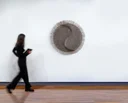
Bronwyn Oliver
(1959 - 2006)
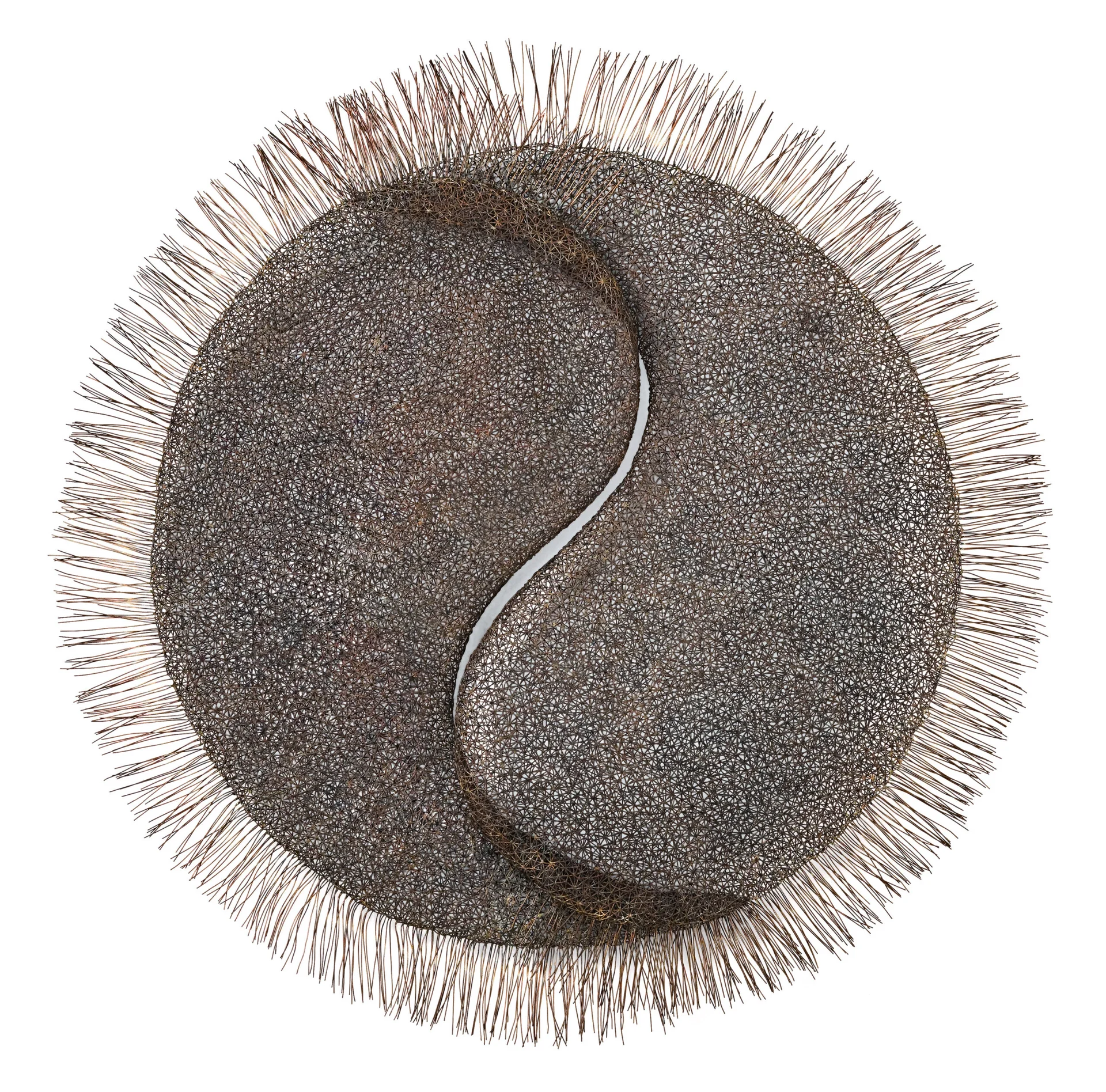
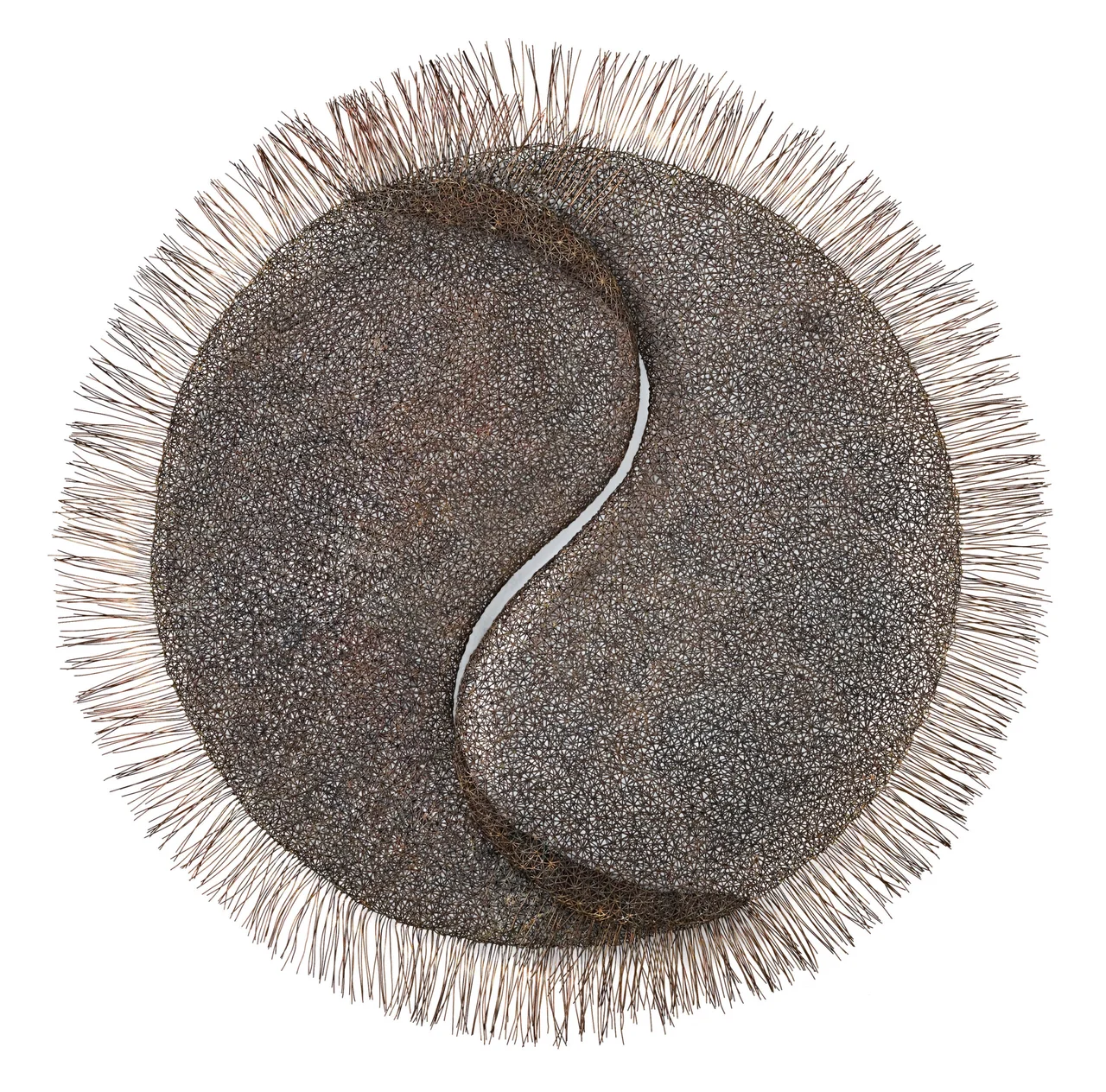
Unity, 2001
copper
112.0 cm diameter
Estimate:
$500,000 - $700,000
© Estate of Bronwyn Oliver. Courtesy of Roslyn Oxley9 Gallery, Sydney
lot details
Roslyn Oxley9 Gallery, Sydney
Private collection, Sydney
Deutscher and Hackett, Sydney, 1 September 2010, lot 6
Private collection, Melbourne
Deutscher and Hackett, Sydney, 10 April 2019, lot 2
Private collection, Canberra
Exhibited
Bronwyn Oliver, Christine Abrahams Gallery, Melbourne, 24 November – 21 December 2001 (illus. in exhibition catalogue)
The Sculpture of Bronwyn Oliver, TarraWarra Museum of Art, Victoria, 19 November 2016 – 5 February 2017
Literature
Fink, H., Bronwyn Oliver: Strange Things, Piper Press, Sydney, 2017, pp. 158 (illus.), 213 (illus. installation), 220
McDonald, J., ‘Arts’, The Sydney Morning Herald, Sydney, 10 January 2017
Hunter, C., (director), Bronwyn Oliver: The Shadows Within, Australian Broadcasting Corporation in association with the National Gallery of Australia, 2021
Lancelin, H., ‘Bronwyn Oliver: The Poetics of Woven Metal’, ArtCritic, 20 May 2025, https://www.artcritic.com/en/bronwyn–oliver–the–poetics–of–woven–metal/ [accessed August 2026]
‘I was intrigued by the idea of enclosing space. If it can be enclosed and held, why not let it flow out and get away at the same time? Having both the inside and outside simultaneously visible in a way denies the physicality of an object. The openness is a kind of humble truth – nothing is hidden.’1
Even though it is now nearly two decades since the untimely death of Bronwyn Oliver, her practice remains without parallel. Oliver’s capacity to transform her favoured material – copper wire, which she loved for its malleability and warmth – into fluid, seemingly life-filled sculptural forms remains a thing of wonder, yet the experience of her mesmerising work is also grounded in its capacity to convey both a quiet power and resoluteness of intention. The curves, spirals and fluid, calligraphic sweeps of the artist’s copper sculptures (and their playful reflections when lit) make an immediate, often breathtaking first impression, but her works are similarly an ode to the importance of the handmade, and to the extraordinary results that can come from dedication, determination, and the rhythm of meticulous, repetitive work. As Oliver’s former partner, Huon Hooke, has recalled:
‘My enduring image of Bronwyn at work is like this. She is sitting cross-legged on the floor, on a piece of foam rubber. Her work is on a low bench constructed of timber covered with fireproof bricks… The tiny jeweller’s blowtorch is in her right hand, the big bottles of oxygen and acetylene standing behind her. In her left is the brazing rod and she’s making one of the thousands of joints that make up a new sculpture, the fire licking at the fireproof cement around the tiny piece of copper wire which is being joined… Whenever she was happy and content, which was usually when she was working, she would say, ‘It feels like there’s order in the universe.’’2
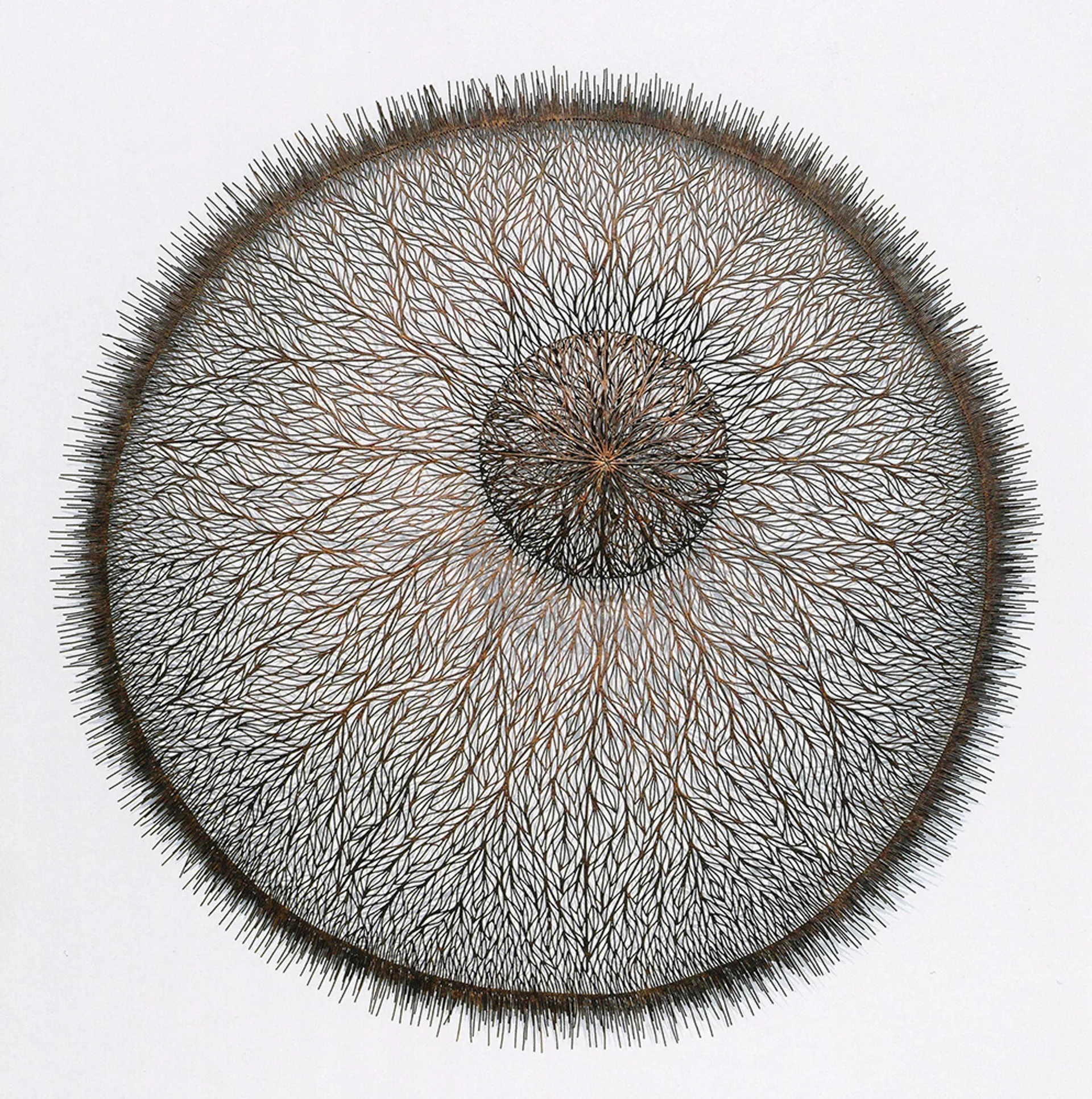
Bronwyn Oliver
Umbra, 2003
copper
110.0 x 110.0 x 20.0 cm
Private collection
© Estate of Bronwyn Oliver. Courtesy of Roslyn Oxley9 Gallery, Sydney
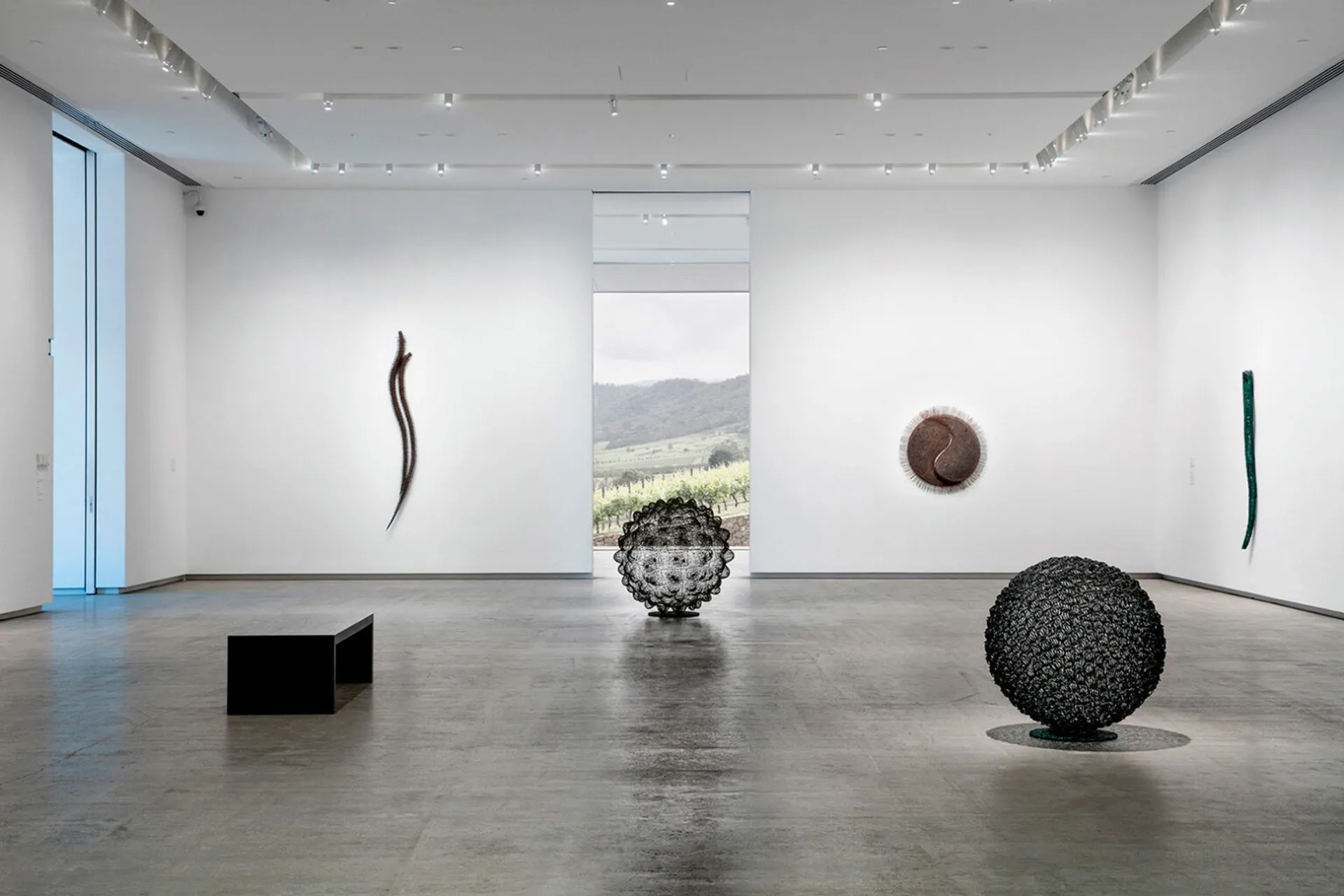
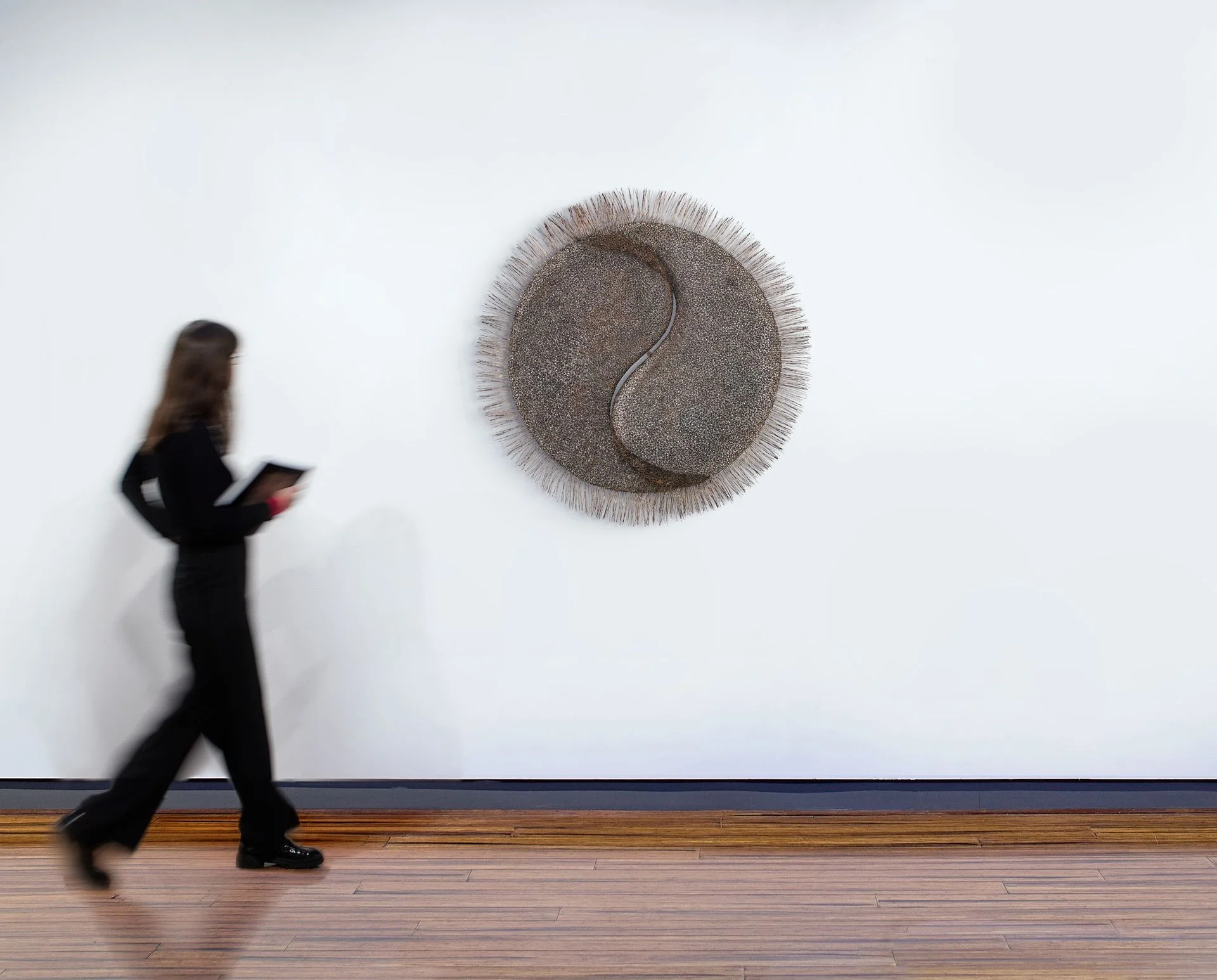
Installation view of The Sculpture of Bronwyn Oliver, TarraWarra Museum of Art, 2016
Unity, 2001, pictured back right wall
photographer: Andrew Curtis
The ability to create a sense of order and ‘rightness’ in the world lies at the heart of Oliver’s sculpture. During a formative period of study at London’s Chelsea School of Art in the early 1980s, she began making abstracted, nature-inspired forms of paper and cane, which occasionally incorporated elements of wood or fibreglass. Copper first appeared as a medium in her practice in the late 1980s, initially worked over fibreglass forms, with the green verdigris of patinated copper a distinctive feature, establishing both colour and surface texture. Even at this early stage of her career, the medium was the driver of each piece, seemingly leading the way as the artist worked through a series of self-established rules or frameworks (usually to do with the piece’s construction). As Hannah Fink has observed, Oliver believed that the material of a work ‘adds up to the life or force of that piece’ and thought of the object and artist as ‘two forces working together.’3
While we can be slightly sceptical of Oliver’s emphatic rejection of nature as a source – ‘I am not and have never been, remotely concerned with the observation of nature. I am not interested in structures in nature. My ideas do not begin with natural forms’4 – there is no doubt that her sculpture transcends its beginnings in the natural world, taking her work (and the viewer) beyond a simple observation of recognisable forms to a contemplation of notions of balance, containment (objects are often enclosed within her webs of copper wire), wholeness, and even menace. With their extraordinary ability to hold a sense of both the interior and exterior in balance, the artist’s works reward close and slow looking, and in doing so, draw you into the beautiful complexity of her world.As Amanda Rowell has written:
‘The microcosmic, complex surface of an Oliver sculpture is an interface between the macroform of its overall shape and the internal cavity or void where the sculpture breathes. The ease of connection between these three formal aspects of her works along with their gently mimetic character – as alluded by their titles – constitute their elegance and simple pleasure.’5
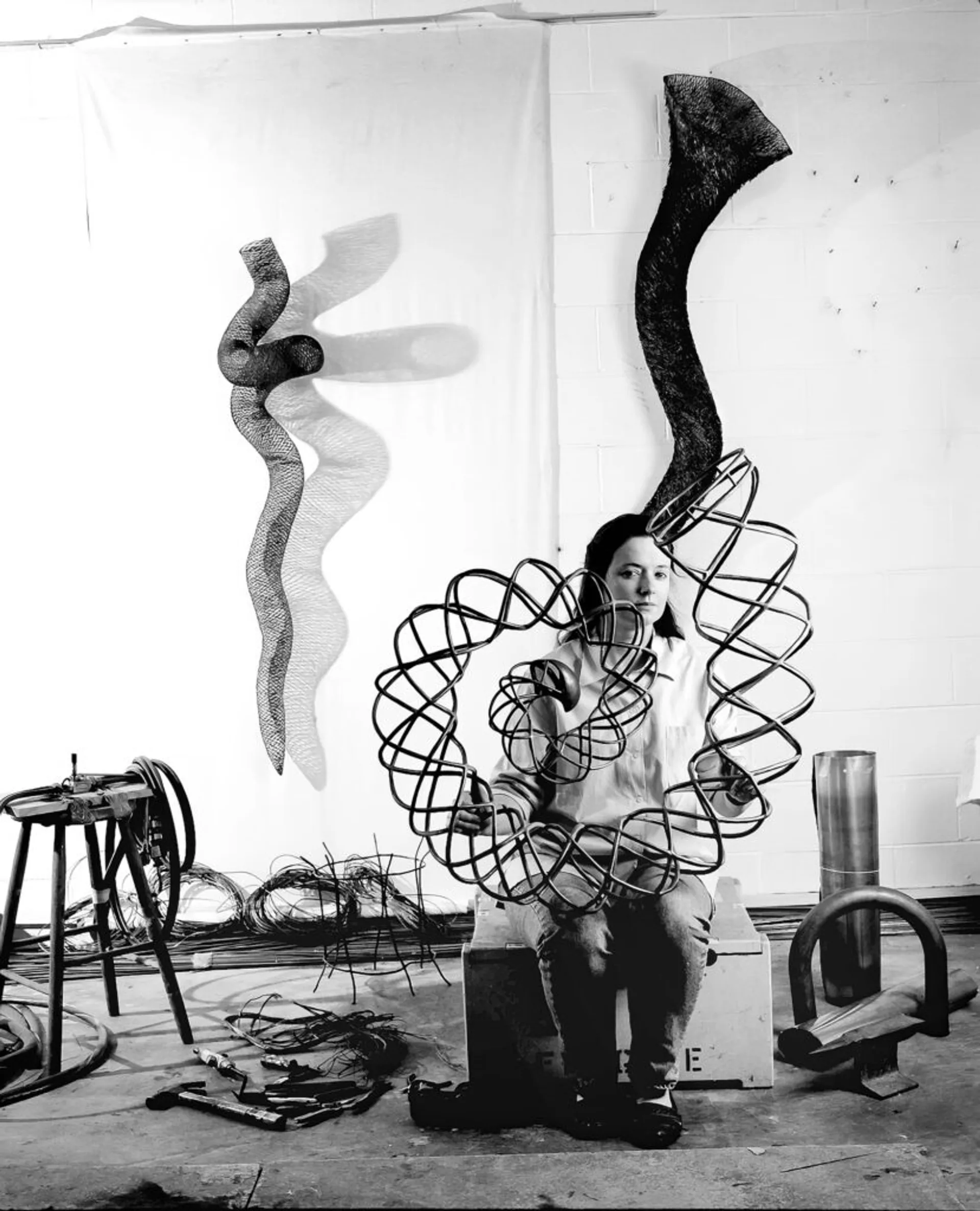
Bronwyn Oliver in studio, 1995
photographer: Greg Weight
© Greg Weight / Copyright Agency, 2026
With the opposing yet interconnected symbols of yin and yang hovering (and encased) within it, the mandala-like form of Unity, 2001 speaks of a search or longing for balance and peace while also emanating a sense of both. ‘I haven’t made an innocent artwork for a long time’6, Oliver once stated, and as we witness in the slightly malevolent, spiky halo surrounding these ancient Chinese symbols, the sense of beauty – and its flipside, darkness – are often hand-in-hand in her sculpture. Indeed, in Unity, the yin and yang / masculine and feminine forms are interwoven at the top and bottom, effectively becoming one. Despite its intricate and densely woven interior, Unity retains a lightness, as if floating on the wall, its mesmerising sense of restraint a testament to the artist’s ability to distil form, and ultimately, to stop when a piece is ‘just right’. ‘I think about sculpture as a kind of physical poetry’, Oliver said, ‘and I construct my sculpture like constructing sentences, in the sense that I try to exclude associations that are clouding the centre and leave in only the associations that add meaning to the core.’7
1. Bronwyn Oliver, cited in Fink, H., Bronwyn Oliver: Strange Things, Piper Press, Dawes Point, 2017, p. 51
2. Hooke, H., ‘Preface’ in Fink, ibid., p. 7
3. Fink, ibid., p. 48.
4. Bronwyn Oliver, cited in Julie Ewington, J. The Sculpture of Bronwyn Oliver, TarraWarra Museum of Art, Healesville, 2016, cited in John McDonald, J., ‘Her art may have contributed to her death but Bronwyn Oliver added a unique chapter to sculpture’, Sydney Morning Herald, Sydney, 10 January 2017 at: https://www.smh.com.au/entertainment/art-and-design/her-art-made-her-ill-but-bronwyn-oliver-added-a-unique-chapter-to-sculpture-20170109-gto8gu.html (accessed 3 September 2026)
5. Rowell, A., Sydney, ‘Bronwyn Oliver’, Roslyn Oxley9 Gallery, Sydney, at: https://www.roslynoxley9.com.au/exhibition/bronwyn-oliver/zbpao (accessed 3 September 2026)
6. Abrahams, G., ‘The Sculpture of Bronwyn Oliver Opening Address’, The Sculpture of Bronwyn Oliver, TarraWarra Museum of Art, 2016, at: https://www.youtube.com/watch?v=EyK2ewy8MRw (accessed 3 September 2026)
7. ‘Elspeth Pitt on Bronwyn Oliver’, National Gallery of Australia, Canberra, 18 July 2025, at: https://nga.gov.au/on-demand/elspeth-pitt-on-bronwyn-oliver/ (accessed 3 September 2026)
KELLY GELLATLY