
Ethel Carrick Fox
(1872 - 1952)
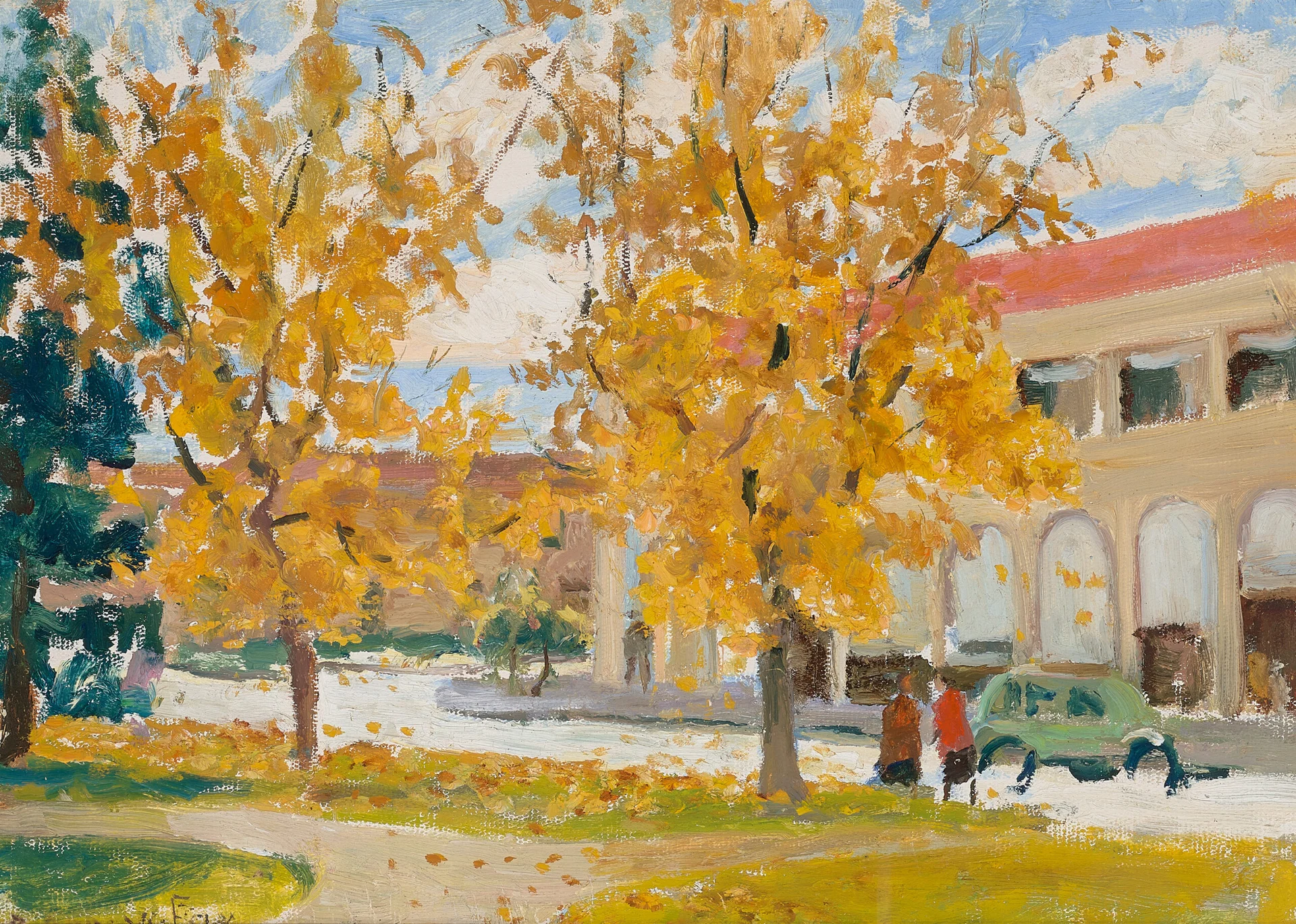
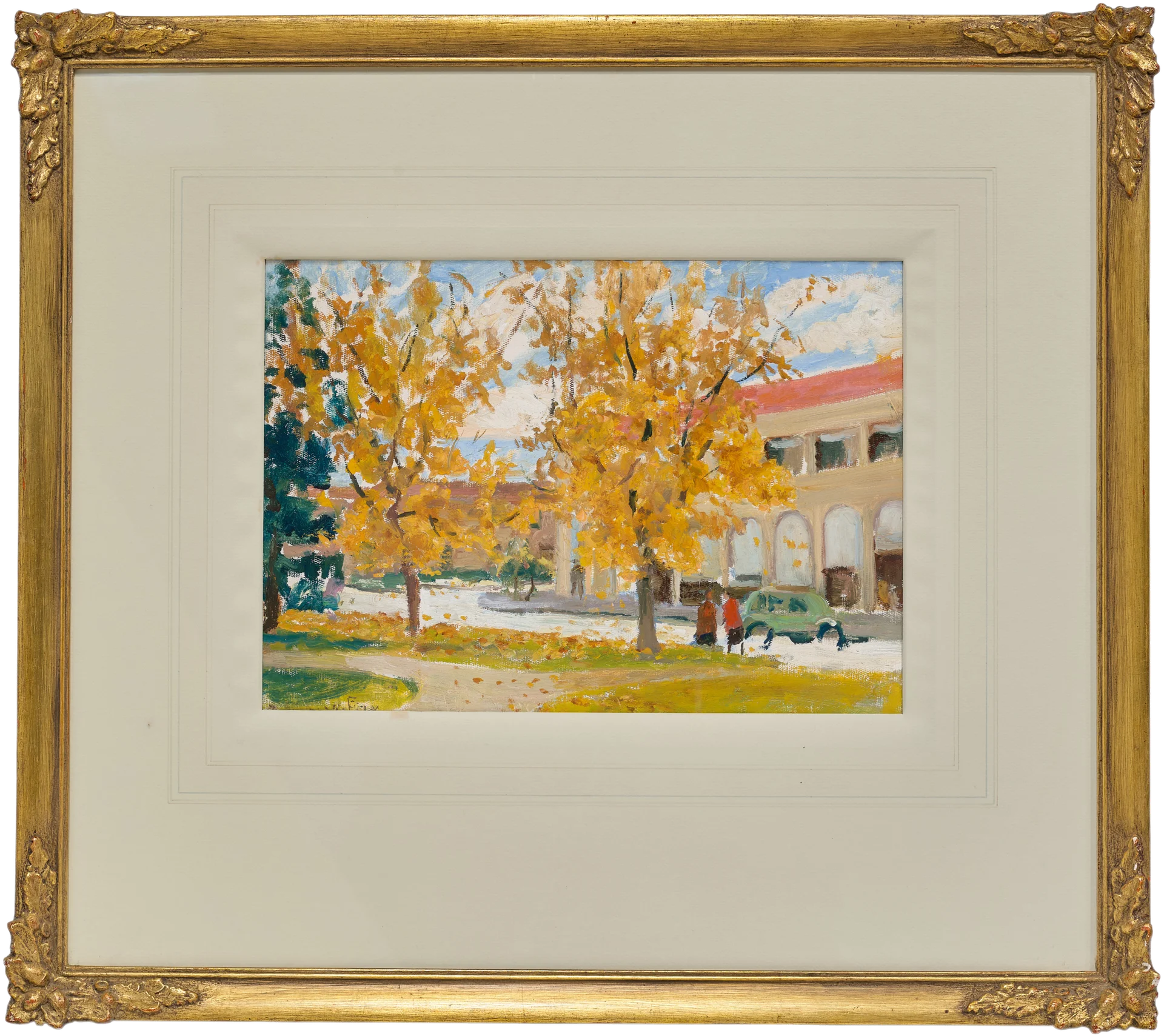
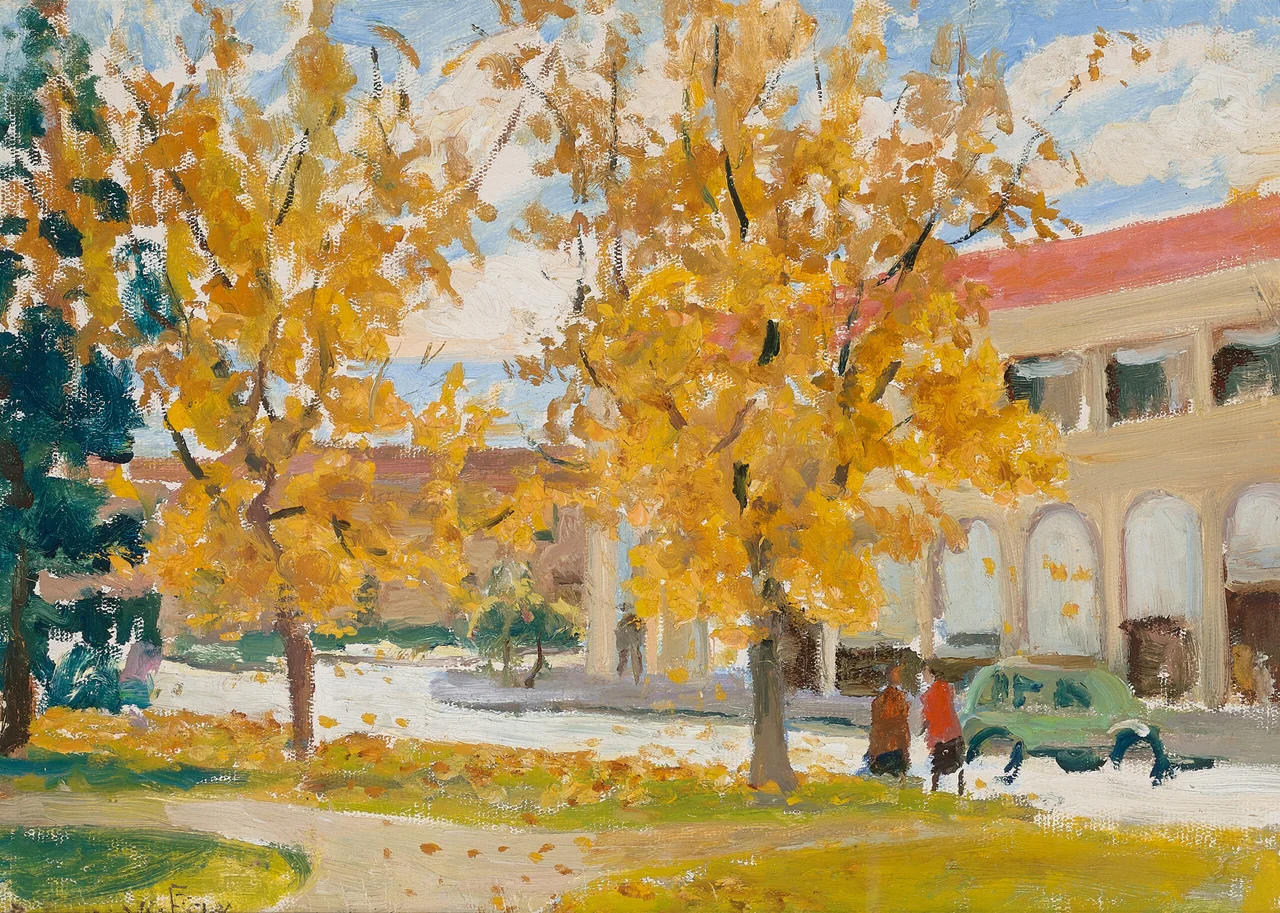
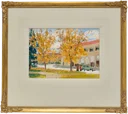
Autumn, Canberra’s Civic Centre, c.1943
oil on canvas board
25.0 x 34.5 cm
signed lower left: Carrick Fox
Estimate:
$20,000 - $30,000
lot details
Private collection
Christie’s, Melbourne, 7 May 2003, lot 282 (as ‘Autumn Canberra’)
Private collection, Canberra
Exhibited
Probably Exhibition of Oil Paintings by Ethel Carrick Fox (Mrs Phillips Fox), Masonic Temple, Canberra, 7 – 10 September 1944 [comprising largely spring and autumn studies of Canberra]
Related Works
Colonnades of Canberra’s Civic Centre, c.1944, oil on canvas board, 25.4 x 35.4 cm, Canberra Museum and Gallery, Canberra
Ethel Carrick Fox was one of a group of dynamic Australian women artists from the first half of the twentieth century whose circle included Sybil Craig, Violet Teague, Bertha Merfield, and Kathleen O’Connor, plus Vida Lahey, whom she taught at her Paris atelier in 1919. A number became close friends, a personal network that extended further to include the feminist advocate Ethel Stephens, and the writers Joan Lindsay and Dame Mary Gilmore. Carrick Fox was a strong, independent personality, ‘not afraid to express her views that women were as intelligent as men and that they had the right to earn their own living.’1 However, when her husband Emanuel Phillips Fox died in 1915 after ten years of marriage, she was left with few assets apart from his paintings and was thus compelled to spend many years promoting his work at the expense of her own. Nonetheless, she also exhibited her own post-impressionist paintings to critical acclaim, including sixteen exhibitions in Australia, eight in London, and approximately twenty-five at the Salon d’Automne and Société Nationale des Beaux-Arts (New Salon) in Paris. Carrick Fox was a keen traveller too and, indeed, when World War Two began, she had recently been living for an extended time on a houseboat in Kashmir. With the outbreak of war, she evacuated her rented Paris studio and returned to Australia, arriving in October 1939. When Paris fell, however, her studio was raided by the Germans and its contents confiscated.
A dedicated follower of the spiritual movement of Theosophy (the main reason behind her Kashmir sojourn), Carrick Fox spent much of the War based at their Sydney headquarters known as ‘The Manor’ in the harbourside suburb of Mosman. She participated in the war effort, taking on such roles as the Honorary Secretary for an Australian artists’ war fund exhibition, as well as participating in art unions and initiating a scheme for purchasing works through the French-Australian Association to aid Australian artists in Paris who were suffering financial privation due to war. During these years, she also made three visits to the Australian Capital Territory, where Autumn, Canberra’s Civic Centre, c.1943 was painted. It was likely done as a companion to Colonnades of Canberra’s Civic Centre, c.1944 (Canberra Museum and Gallery) and shows a similar view of the city’s Sydney and Melbourne Buildings which frame Northbourne Avenue. Designed by Sir John Sulman, their Renaissance-inspired arched colonnades would have reminded Carrick Fox of similar buildings in France and Spain. Autumn, Canberra is a delightfully plein air painting whose vigorous brushwork captures a blustery day with pedestrians rugged up against the cold. It also exhibits a number of Fox’s sources, from her experience painting alongside her husband’s close friend Rupert Bunny in Paris, to the use of square-ended brushes, a technique she adopted following a visit to the Barbizon-inspired artist colony of Newlyn in Cornwall in 1904, a painterly strategy which ‘concentrated description upon “tone and value.” Outlines were blurred. The effect and purpose was to suggest a kind of atmospheric envelope.’2 Atmosphere is exactly what Carrick Fox achieves here, with the blazing poplars rapidly losing their leaves, ‘while her dappled brushwork captures… the many colours of a sunny autumn day in the nation’s capital.’3
1. de Vries, S., Ethel Carrick Fox: travels and triumphs of a post-impressionist, Pandanus Press, Brisbane, 1997, p. 10
2. Fox, C., and Greenacre, F., Artists of the Newlyn School (1880-1900), Newlyn Art Gallery, England, 1979, p. 21
3. ‘Ethel Carrick Fox, Colonnades of Canberra’s civic centre, 1943’, Canberra Museum & Gallery (online) https://www.cmag.com.au/collection/series/paintings/items/colonnades-of-canberra-s-civic-centre/catalogue (accessed 10 August 2026)
ANDREW GAYNOR