
Arthur Boyd
(1920 - 1999)
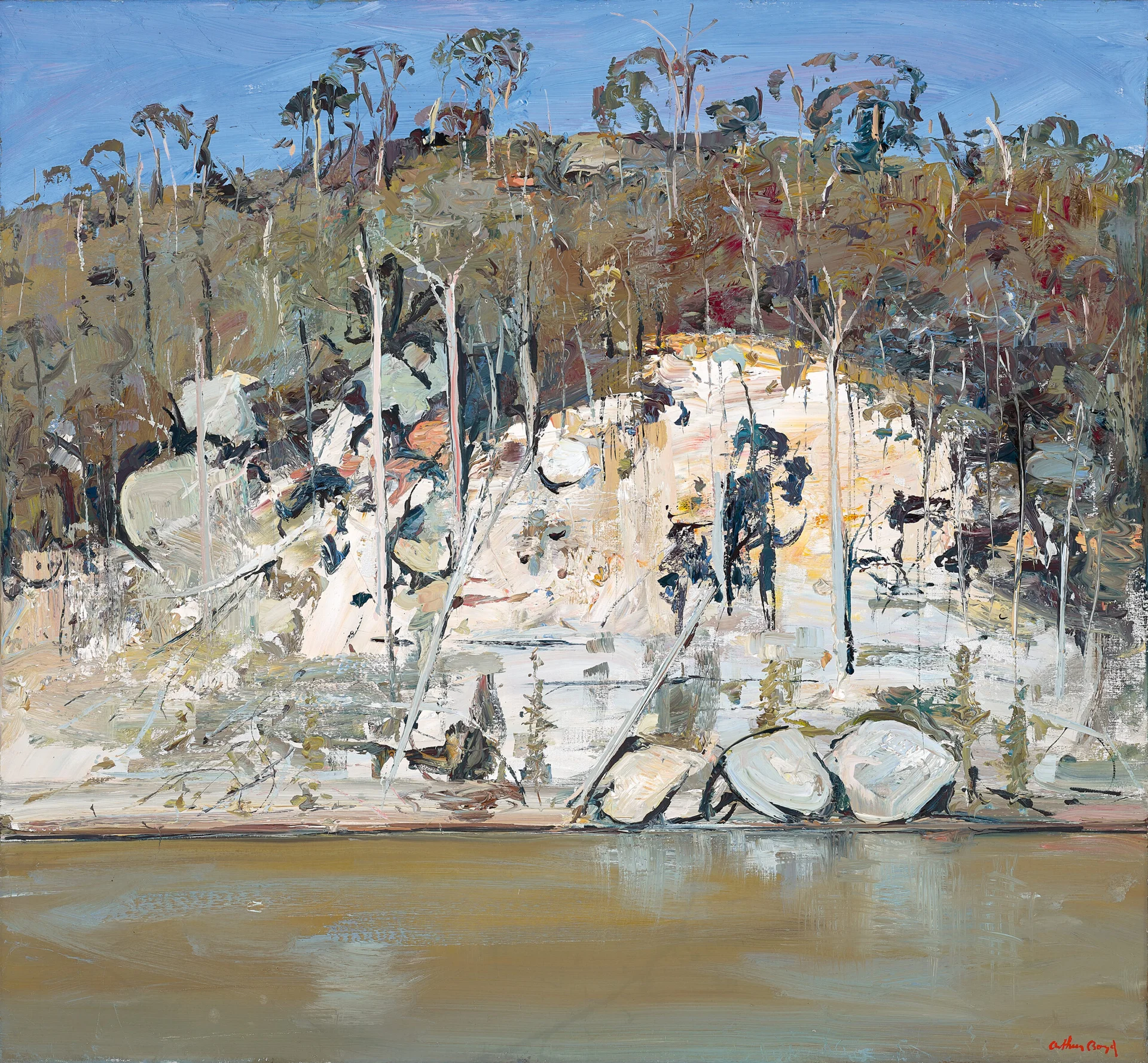
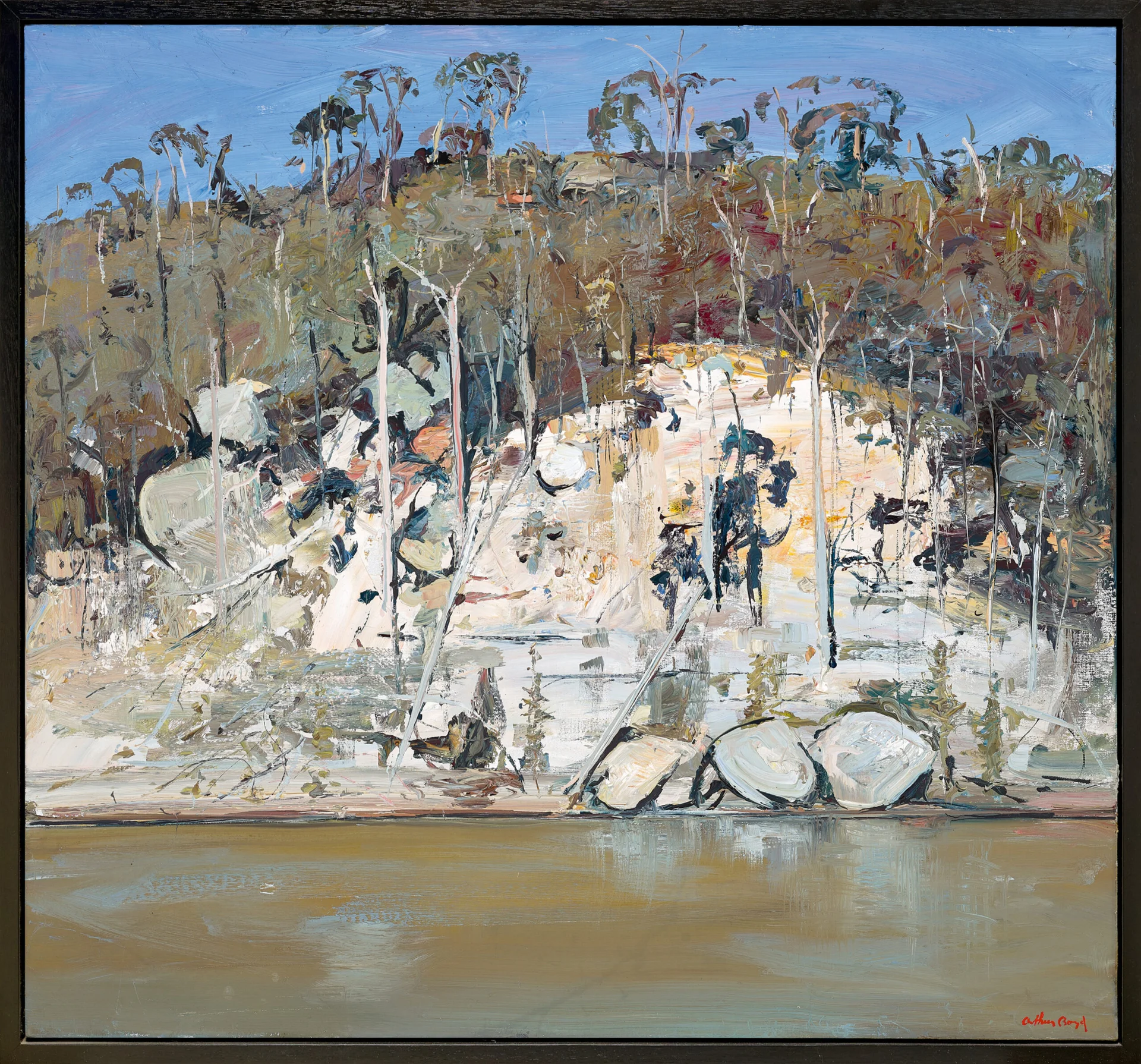
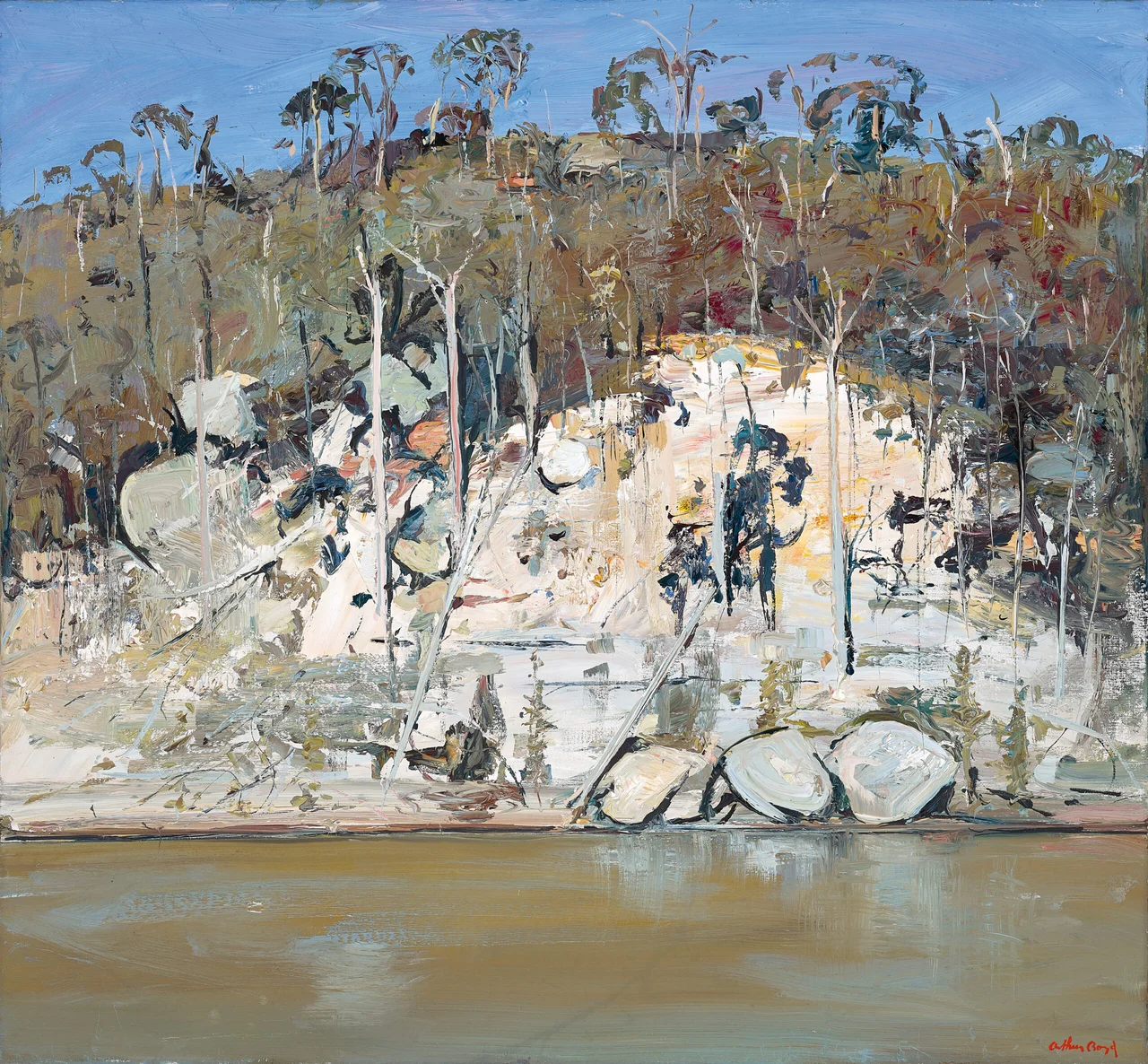
Shoalhaven landscape, c.1980
oil on canvas
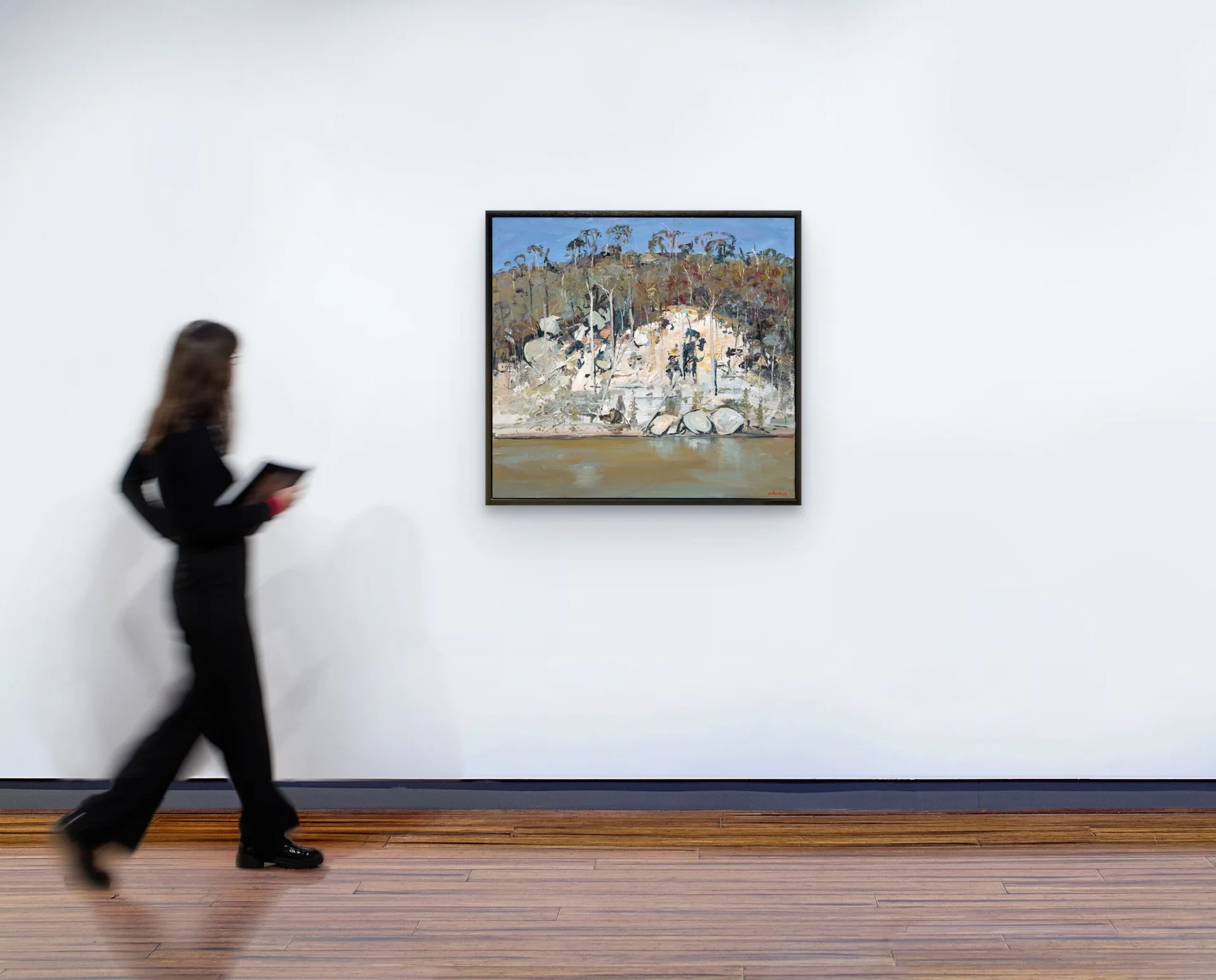
91.5 x 98.5 cm
signed lower right: Arthur Boyd
Estimate:
$100,000 - $150,000
© Arthur Boyd/Copyright Agency 2026
lot details
John Andrews, Sydney
Private collection, Canberra, acquired from the above in October 2001
‘The natural beauty of the Shoalhaven area caused Boyd to marvel constantly. His paintings are a celebration of grandeur and wonder of Nature. It is to Boyd’s credit that a single landscape can inspire such diversity of work. He gives us the impression that there are infinite possibilities, as long as we train ourselves to see.’1
Eager to rediscover his roots, his ‘Australianism’, after more than a decade abroad, in 1971 Arthur Boyd returned to his country of birth to take up a Creative Arts Fellowship at the Australian National University in Canberra. Over the blazing summer of 1971 – 72, Boyd and his wife Yvonne were invited by the Sydney art dealer Frank McDonald to visit Bundanon on the south coast of New South Wales, where McDonald shared a home with art historian Sandra McGrath and her husband Tony. Here, the artist’s joyful rediscovery of the Australian bush, with its stark contrasts and clarity of light, was nothing short of an epiphany, and thus in 1974, Boyd purchased the nearby property Riversdale on the banks of the Shoalhaven River. Once again, the magic of the rugged, untamed Australian landscape became the impetus for his art, and over the subsequent twenty-five years until his death in 1999, Boyd would dedicate himself almost exclusively to capturing the myriad moods of the Shoalhaven in images that are today imprinted upon the national psyche as some of our most beloved and iconic.
Mesmerising in its beauty, the Shoalhaven region offered both refreshing solace for the artist’s world-weary eyes, and endless potential as a subject – ‘the variation in the area with its great deep tones and high keys’ bearing strong affinities with music. As Boyd elaborated, ‘in the desert there is only one note, just one low singing note. In this landscape the tonal range – not tonal in the obvious sense of colour, but the actual fact of the horizon which can vary from very high to low, to infinite, depending on your line of vision – makes it a greater challenge. It has a knife-edged clarity. Impressionism could never have been born here, but Wagner could easily have composed here.’2 Wild and primordial, the region differed completely from the ordered English countryside to which he had grown accustomed and thus, a new vision was required to unlock its tangled mysteries. If previously Bruegel and Rembrandt had offered inspiration, now von Guérard, Piguenit and Buvelot became Boyd’s spiritual mentors.
With its shimmering light, golden palette and characteristic format of broad horizontal bands of sky, earth and water, the present offers a superb example of Boyd’s early Shoalhaven landscapes which – devoid of the mythological creatures and symbolic narrative punctuating later versions – simply pay homage to the sheer beauty, grandeur and wonder of Nature. Enlivened by the interplay of horizontal passages andthe vertical tracery of eucalypts and bleached tree trunks, the composition is punctuated by their skeletal forms, while the cluster of pale, rounded boulders at the water’s edge provides a solid counterpoint, reinforcing its rugged physicality and Boyd’s fascination with its ‘knife-edged clarity’. Capturing the Shoalhaven in the blistering heat of the midday sun, indeed the work is a poignant reminder of how Boyd, comfortable once more with the eternal diversity of the Australian landscape, ultimately did tame his wilderness: ‘…what was unfamiliar became familiar, what was menacing became friendly, what was awesome became intimate.’3
1. McKenzie, J., Arthur Boyd at Bundanon, Academy Editions, London, 1994, p. 42
2. Arthur Boyd, cited in Pearce, B., Arthur Boyd Retrospective, Art Gallery of New South Wales, Sydney, 1993, pp. 26 – 27
3. McGrath, S., The Artist and the River, Bay Books, Sydney, 1982, p. 79
VERONICA ANGELATOS