
William Dobell
(1899 - 1970)
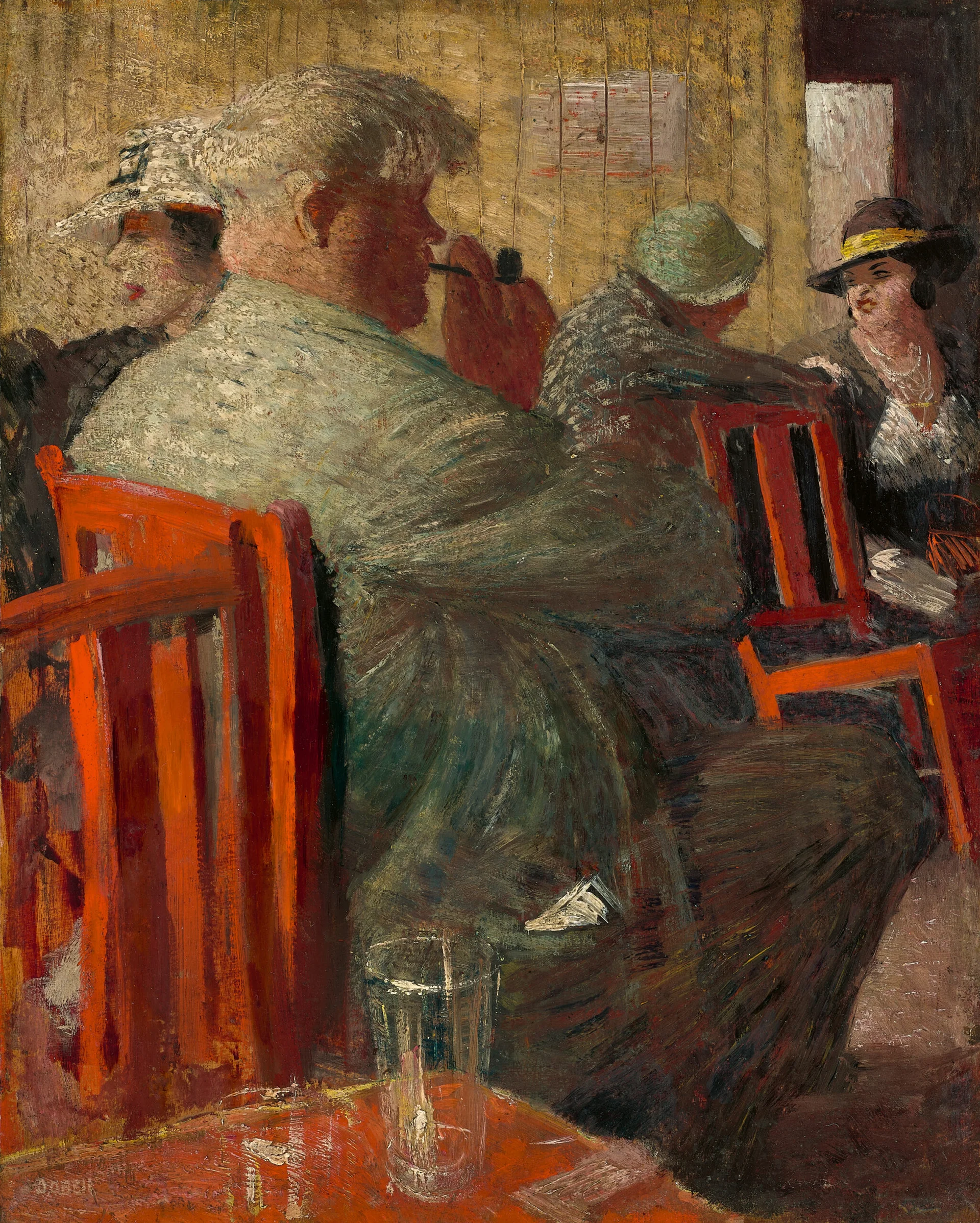
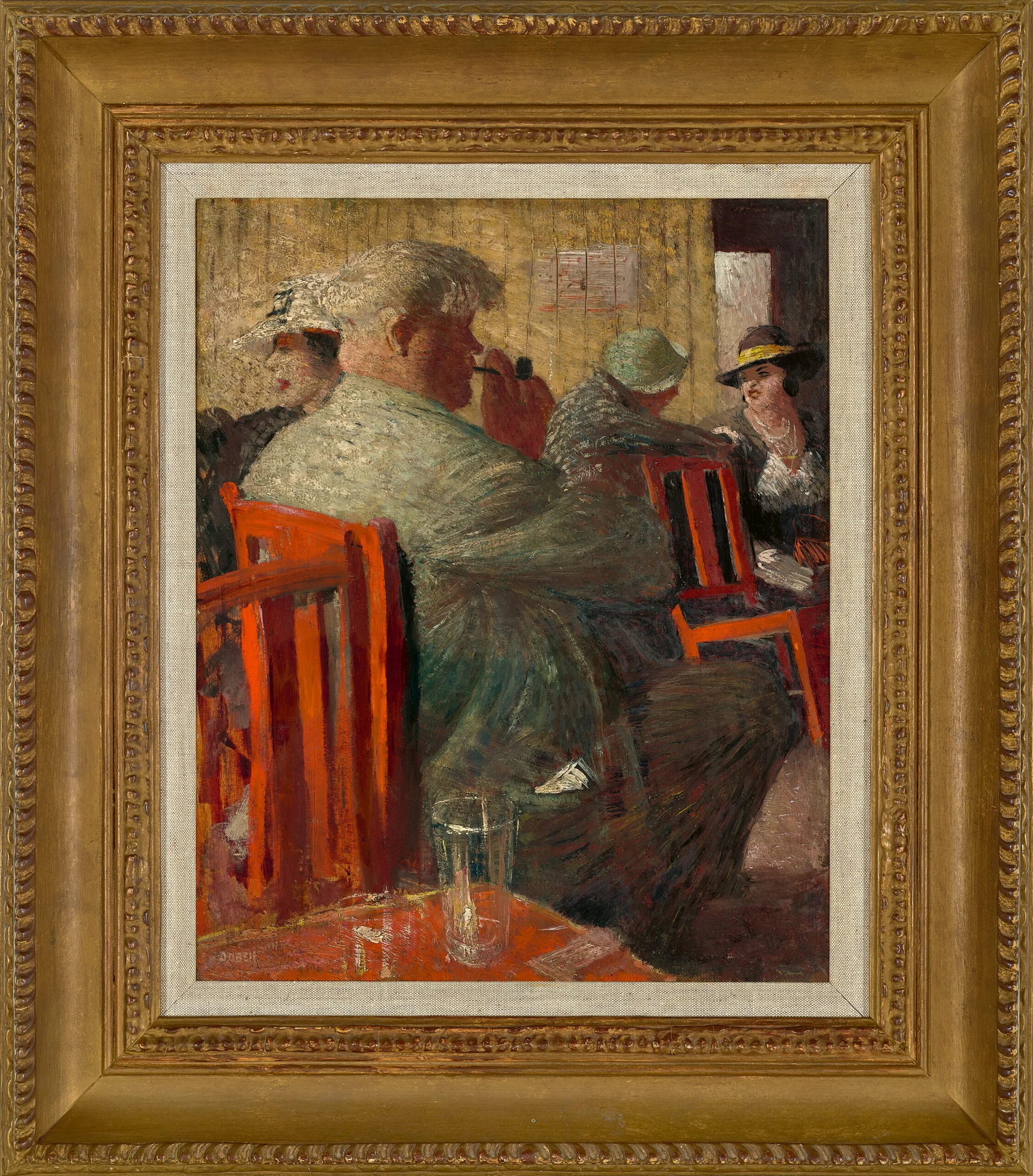
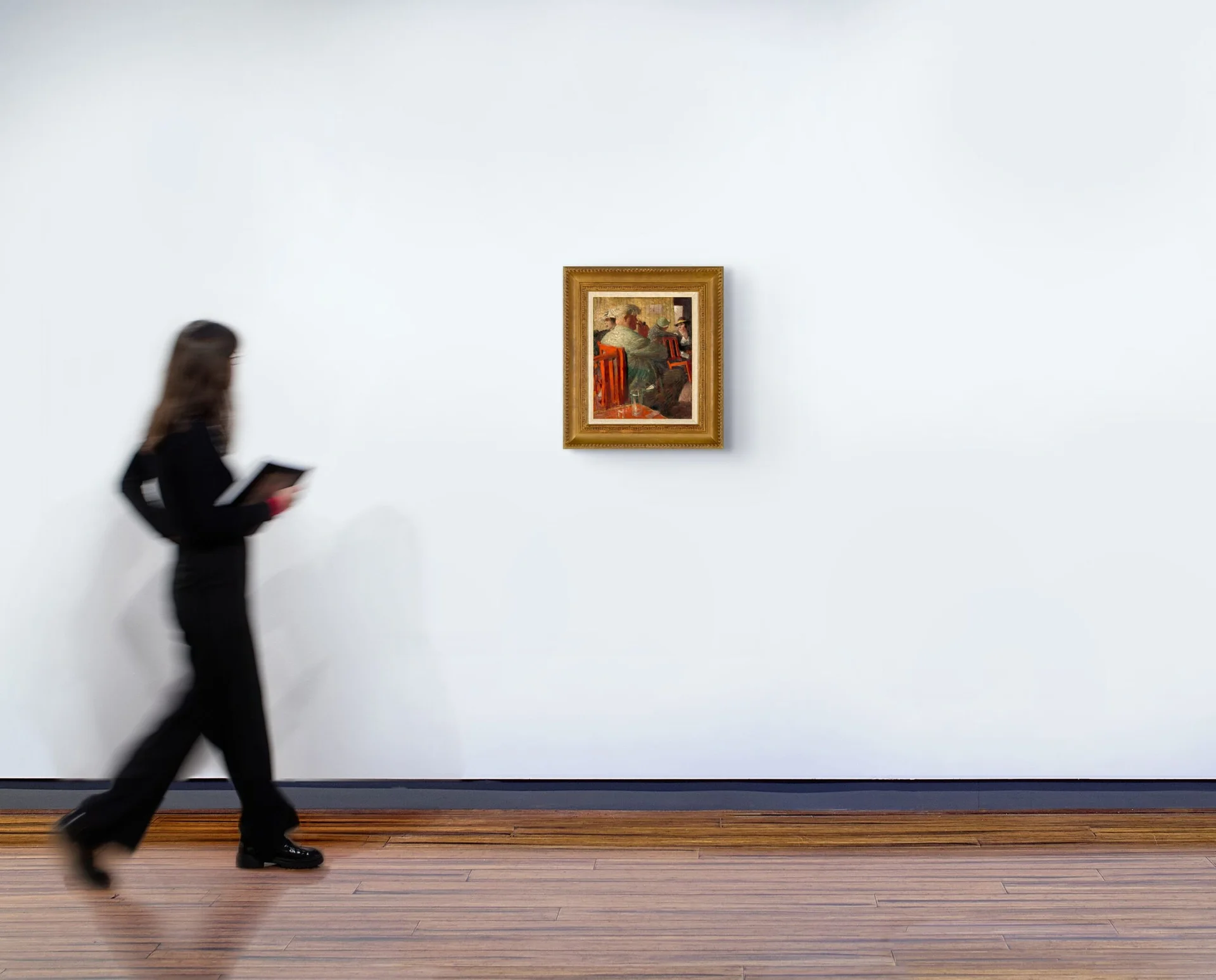
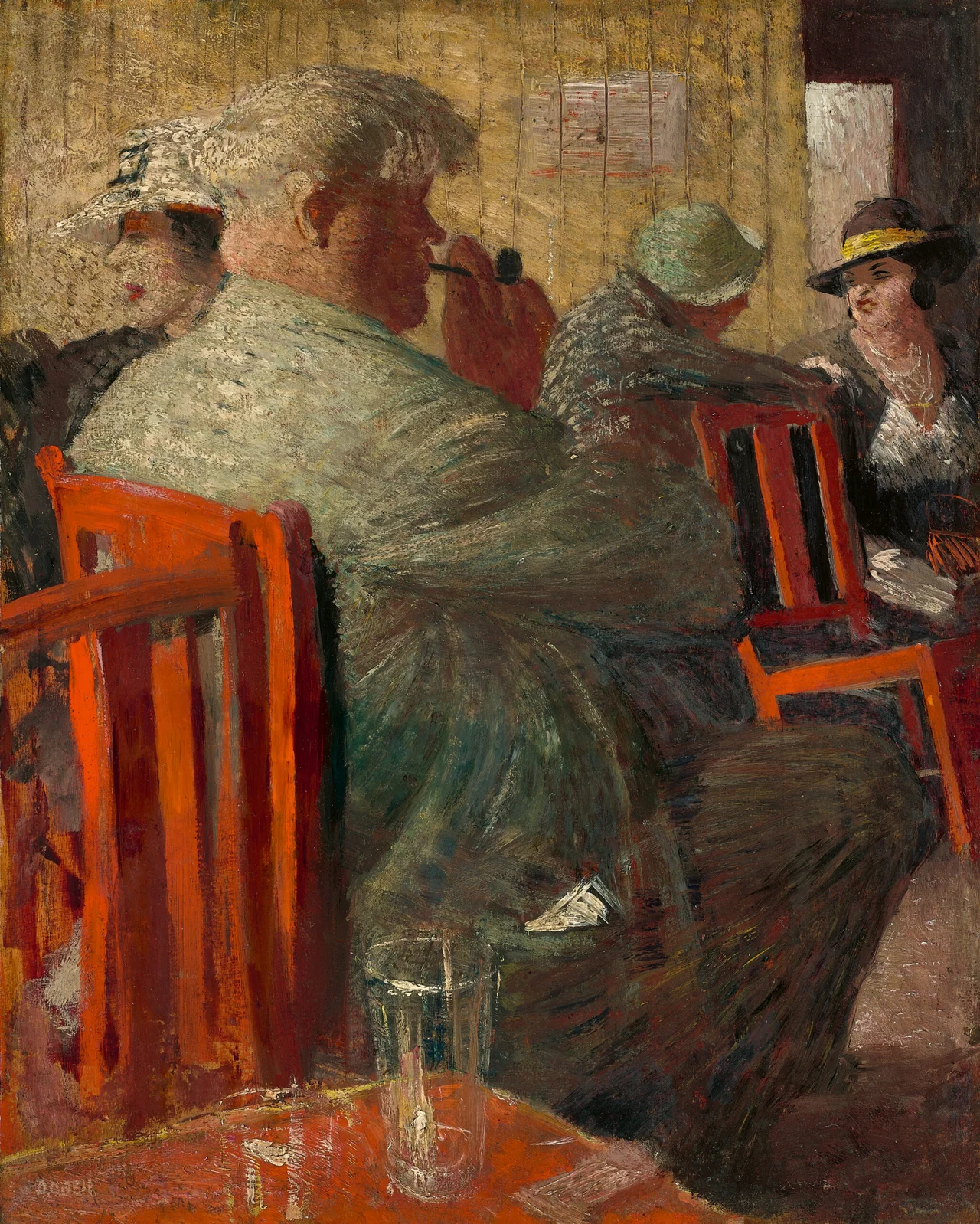
Film crowd workers, 1937
oil on wood panel
41.0 x 33.0 cm
signed lower left: DOBELL
Estimate:
$350,000 - $450,000
© Courtesy Sir William Dobell Art Foundation/Copyright Agency, 2026
lot details
Norman Schureck Collection, Sydney
The Norman Schureck Collection of Valuable Pictures, James R. Lawson, Sydney, 28 March 1962, lot 35
Rudy Komon, Sydney
Camille Gheysens, Sydney
Private collection, Sydney
Sotheby’s, Sydney, 17 November 1988, lot 354
Joseph Brown Gallery, Melbourne, acquired from the above
Henry Krongold, Melbourne
Private collection, Melbourne
Exhibited
Norman Schureck Loan Exhibition, Art Gallery of New South Wales, Sydney, 27 May – 29 June 1958, cat. 35
Dobell Loan Exhibition, Newcastle City Art Gallery, New South Wales, 22 June – 13 July 1960, cat. 16
William Dobell: Paintings from 1926 – 1964, Art Gallery of New South Wales, Sydney, 15 July – 30 August 1964, cat. 38 (dated as ‘1935 – 36’)
Literature
Ure Smith, S., (ed.), The Art of William Dobell, Ure Smith, Sydney, 1946, p. 84 (illus.)
O’Grady, D., & Worstead, V., ‘Investment in Art: A Sound New Business’, The Bulletin, Sydney, 14 April 1962, p. 14
Gleeson, J., William Dobell, Thames and Hudson, London, 1964, cat. 64, p. 191
Donaldson, E., William Dobell: an artist’s life, Exisle Publishing, New South Wales, 2010, pp. 49 (illus.), 196 (illus.)
In the early 1930s, the British film industry experienced a boom with some 145 features produced in 1934 alone, thus increasing opportunities for the unemployed to earn wages as film extras. William Dobell, who had been based in London since 1929, was one of the hopefuls, recalling later that ‘where we were to assemble to get crowd work, it was really pathetic to see people trying to get work there in their hundreds…. The footpath would be crowded with people.’1 In the movie Chu Chin Chow (1934), starring the luminous Anna May Wong, a melee erupts between bandits, courtiers and merchants, resulting in two large scrums of writhing extras.2 Under one, weighed down by at least six burly men, lies a hapless William Dobell. He endured a broken rib but was delighted as ‘I was in the right place when they said ‘Cut!’ because they needed me the next day. I got five days’ work which was really a fortune at two pounds nine shillings ($4.90) a day.’3
William Dobell
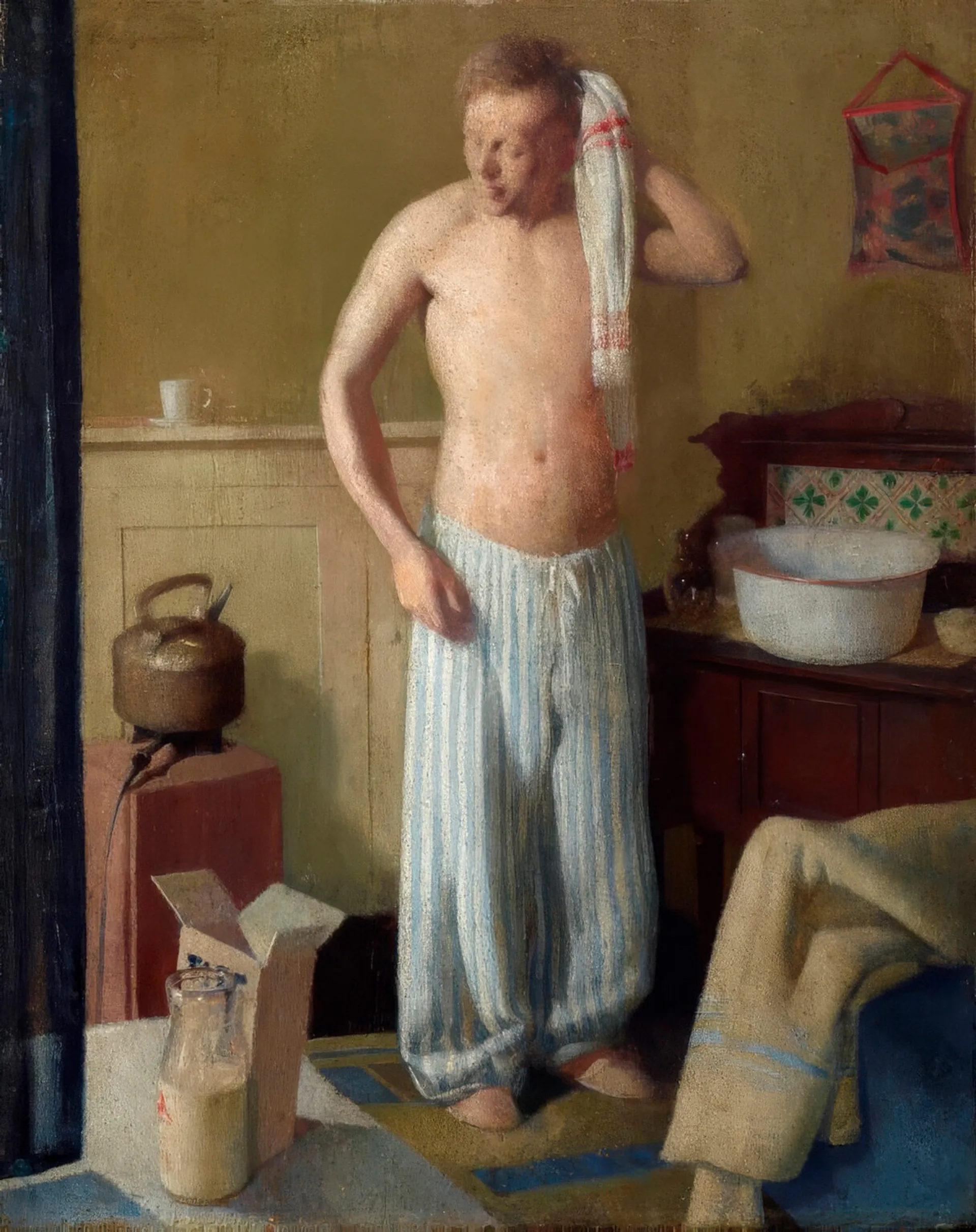
The boy at the basin, 1932
oil on wood panel
41.0 x 33.2 cm
Art Gallery of New South Wales, Sydney
© Courtesy Sir William Dobell Art Foundation / Copyright Agency, 2026
William Dobell
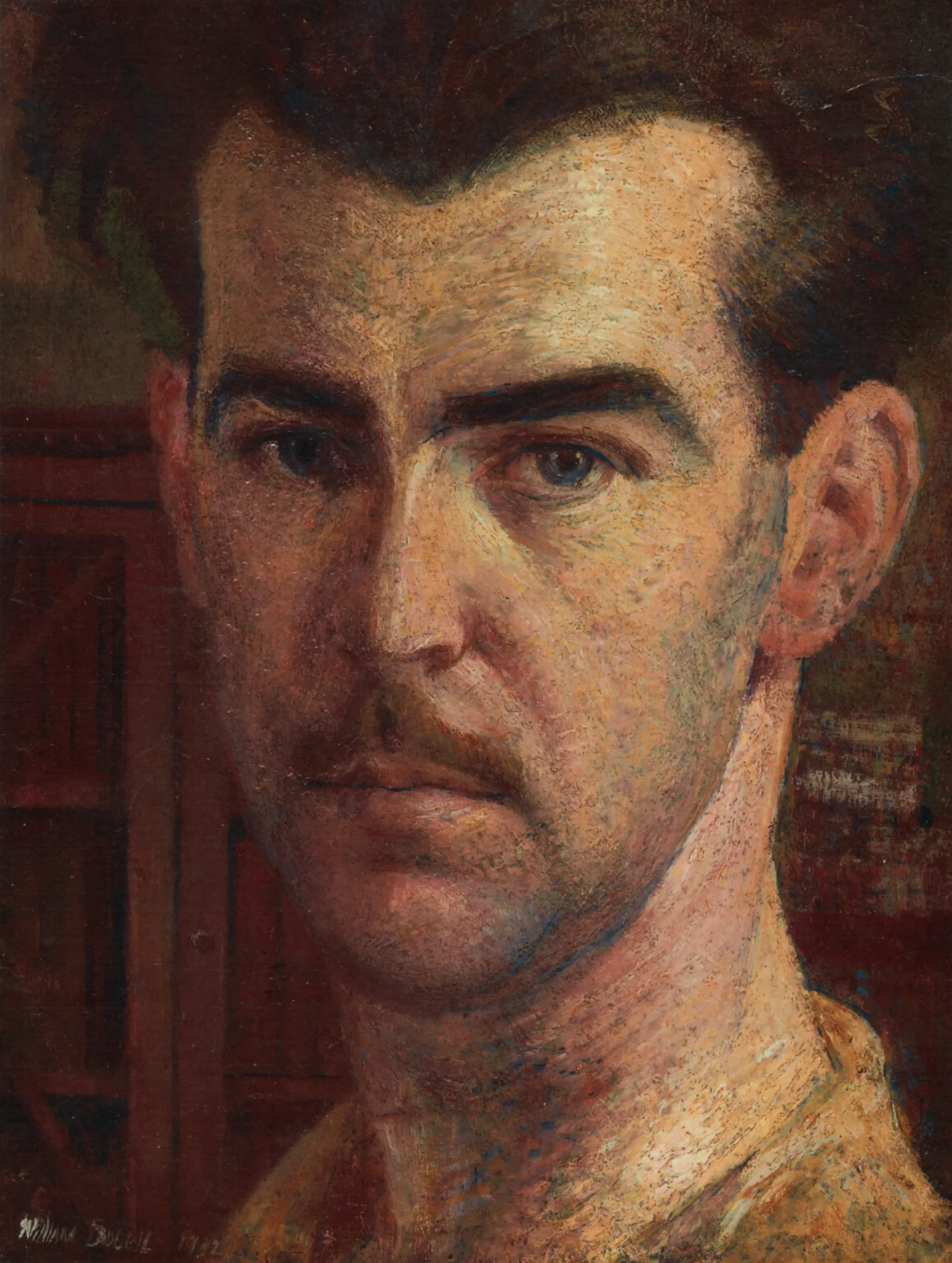
Self portrait, 1932
oil on wood panel
35.0 x 27.0 cm
Art Gallery of New South Wales, Sydney
© Courtesy Sir William Dobell Art Foundation / Copyright Agency, 2026
William Dobell
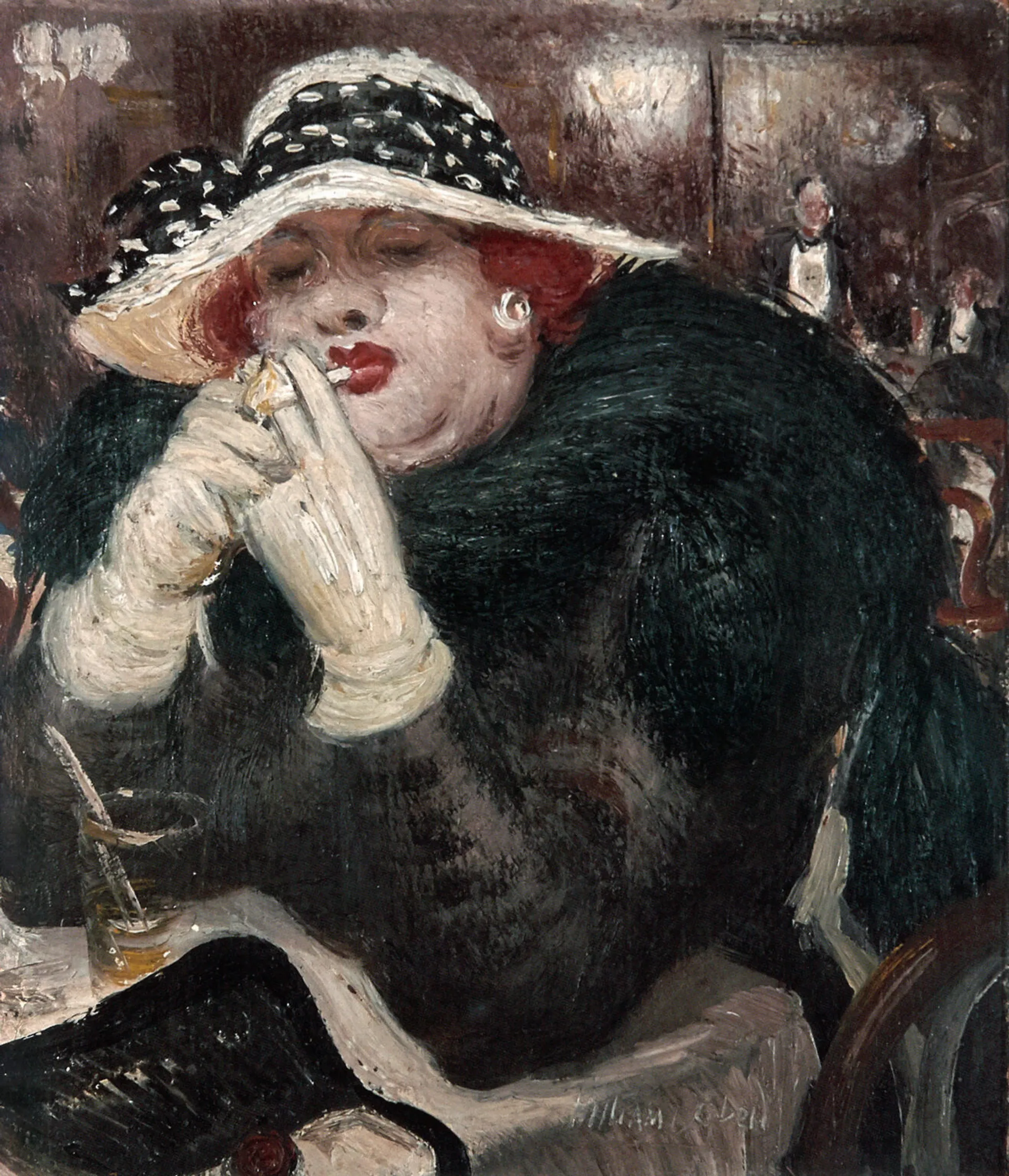
Woman in Restaurant, 1934
oil on cardboard
22.3 x 19.7 cm
Private collection
© Courtesy Sir William Dobell Art Foundation / Copyright Agency, 2026
Dobell had travelled to London after being awarded the Society of Artists’ travelling scholarship in April 1929, which carried with it a stipend of £250 a year for two years; the committee for the Artists’ Ball and Wunderlich Ltd each donated a further £50 a year. He enrolled for the winter term at the Slade School of Fine Art, but following the advice of fellow artist George Lambert, he also took private lessons from Sir William Orpen. In 1930, Dobell won the School’s first prize for figure painting with his Slade nude (Newcastle Region Art Gallery) and shared the second prize for drawing. He visited Holland and Paris that same year, then Belgium in 1931, after which his money ran out. For five years he lived in squalid bed-sitting rooms in Bayswater and Pimlico, often going without meals, boot-polishing his feet to hide the holes in his socks. ‘He worked at commercial art, at cheap magazines, as a film extra. He always hoped that a movie talent scout would spot him.’4 Nonetheless, he continued to work studiously on his paintings, creating early masterworks such as The boy at the basin, 1932 (Art Gallery of New South Wales); Woman in restaurant, 1934 (private collection); The dead landlord, 1936 (private collection); and Young man sleeping, c.1936 (see Deutscher and Hackett, Melbourne, 27 August 2025, lot 6). In May 1933, he exhibited The boy at the basin at The exhibition of the Royal Academy of Arts MCMXXXIII, in a small gallery alongside such stalwarts as George Clausen, Dame Laura Knight and Glyn Philpot, with the critic P.G. Konody of The Observer singling Dobell out as being ‘exceptionally gifted.’5 Australian colleague Darryl Lindsay also had a work in the same room. Later, as a commercial artist, Dobell created a vibrantly coloured image for the Orient Line in 1938 advertising voyages to Australia and featuring a surfboard rider.
Living in such straitened circumstances in Bayswater, then particularly, in Pimlico, Dobell expressed his empathy with his equally impoverished neighbours. Many of the same lanes had been depicted by Hogarth two hundred years earlier, and little had changed since. Drawing upon his personal pantheon of Rembrandt, Van Gogh, Velázquez and the Flemish artists, Dobell used many passers-by as subjects for his painting: the sneering and precocious Girl with a hoop, 1936 (TarraWarra Museum of Art); a weary worker who leans over a sill in The chamber maid (aka Maid at the window), 1937 (private collection); the overpainted, older woman seen in Mrs South Kensington, 1937 (Art Gallery of New South Wales), sitting in a café full of her own pomposity; or the haggard figure cradling her babyin Cockney mother, 1937 (private collection). ‘Dobell was in the habit of painting what he witnessed from his lodgings and, living in a busy area, he found many characters to observe and paint. There were charladies, ‘nippies’ (housemaids), gossiping cockney women, traders with horse-drawn carts, women cleaning front steps and many others – a passing parade of free subject material for his paintings.’6 Apart from The boy at the basin at the Royal Academy, Dobell made no real effort to establish himself as an artist, exhibiting only two more paintings over his nine years in London, The chamber maid (aka Maid at the window) at the New English Art Club in 1937; and Street singer, 1937 (Art Gallery of Western Australia) with the London Group in 1938. While he received good reviews for all three paintings, none were sold.7
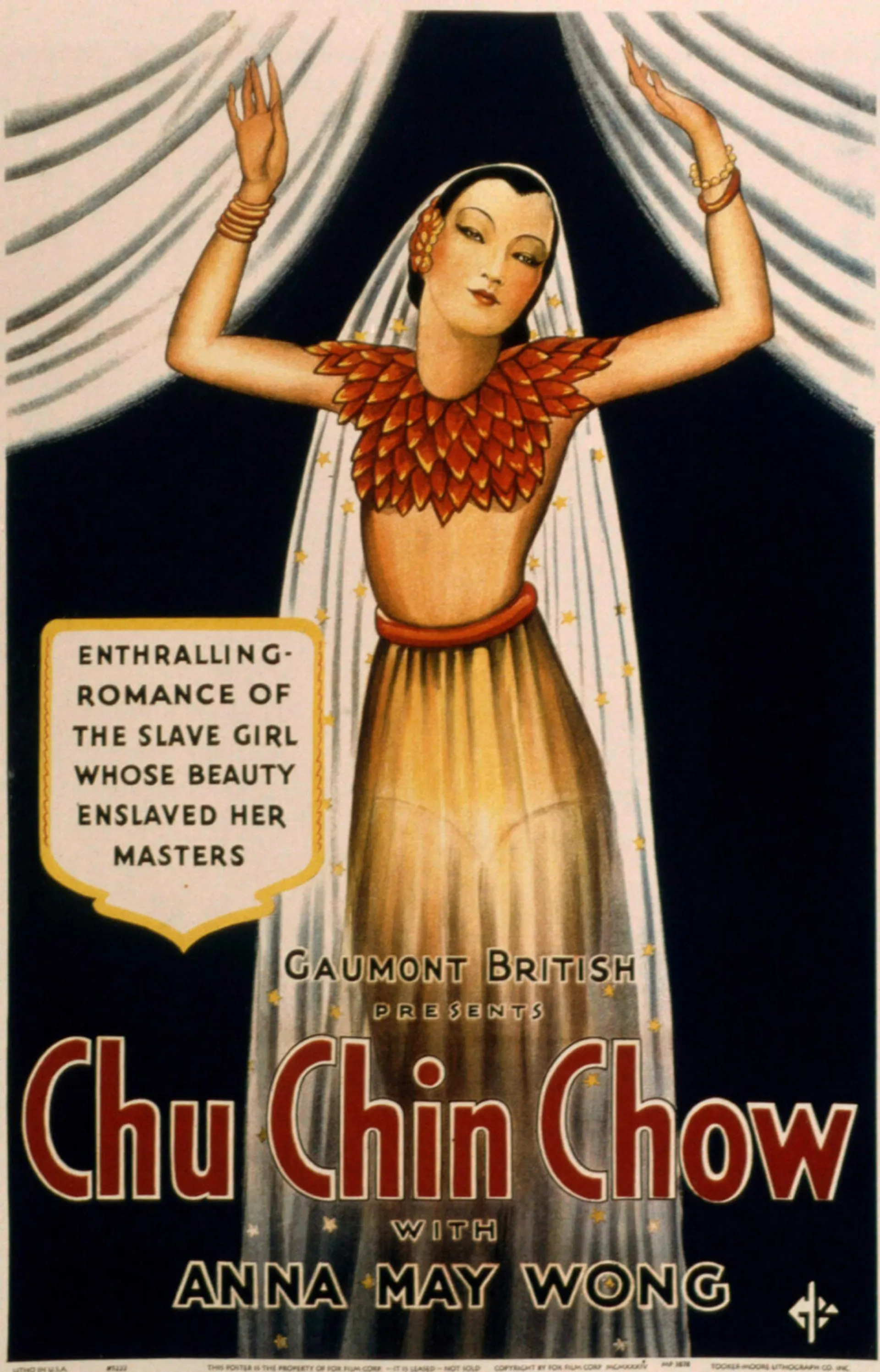
Poster for film Chu Chin Chow (1934), directed by Walter Forde for Gaumont-British
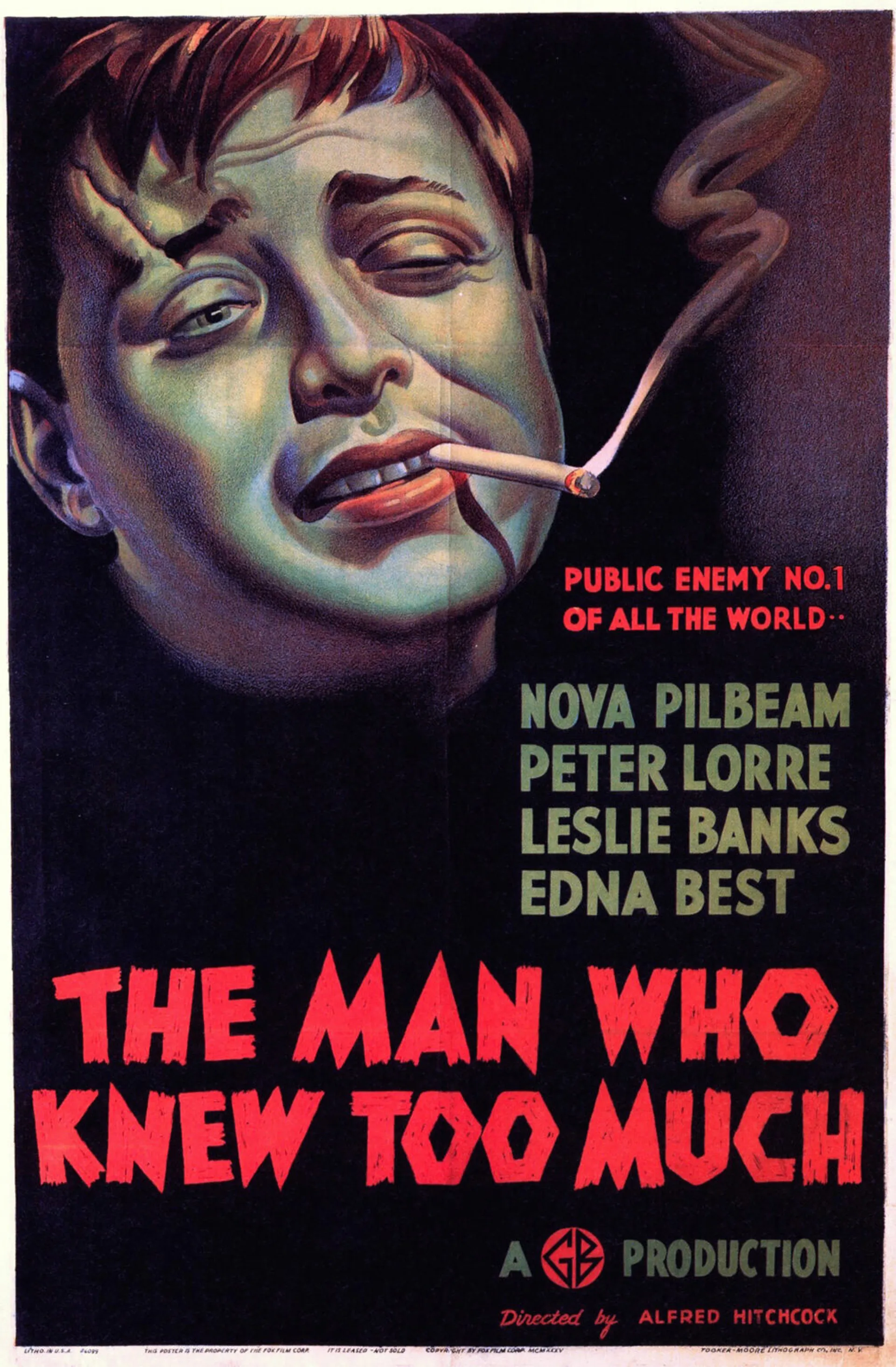
Poster for film The Man Who Knew Too Much (1934), directed by Alfred Hitchcock for Gaumont-British
The money Dobell earned as a film extra was irregular but definitely of assistance, and it gave him rich experiences to draw on for future paintings: his sketchbooks are full of rapid observations of people. He had three casting portrait photographs made, wryly noting on the back of one he sent back to his family, ‘I’m not really swanky as this looks. I had dirty undershirt and socks also holes in latter (or rather socks attached to holes.)’8 In an interview with artist and critic James Gleeson, Dobell recalled that his first appearance was in Frank Capra’s Forbidden Territory, a political romance, at Hammersmith Studios in 1934. He then gave a slightly inaccurate account of his experiences on Chu Chin Chow, confusing the scene sequence as he spoke.9 Dobell is known to have painted a scene of extras getting dressed for Chu Chin Chow and gave it to a neighbour; it has not since been traced. Whilst he made a poor show at his one chance of delivering a line in another movie, Dobell did experience the excitement and discipline of working in Alfred Hitchcock’s highly regarded The man who knew too much, 1934. Sadly, fate again intervened. Cast as a private detective, he ‘was fired when he refused to crawl in the mud, because he was wearing his best suit’.10 He did appear in the massed choir later in the film but there are hundreds of extras in this scene, so identifying Dobell is impossible.
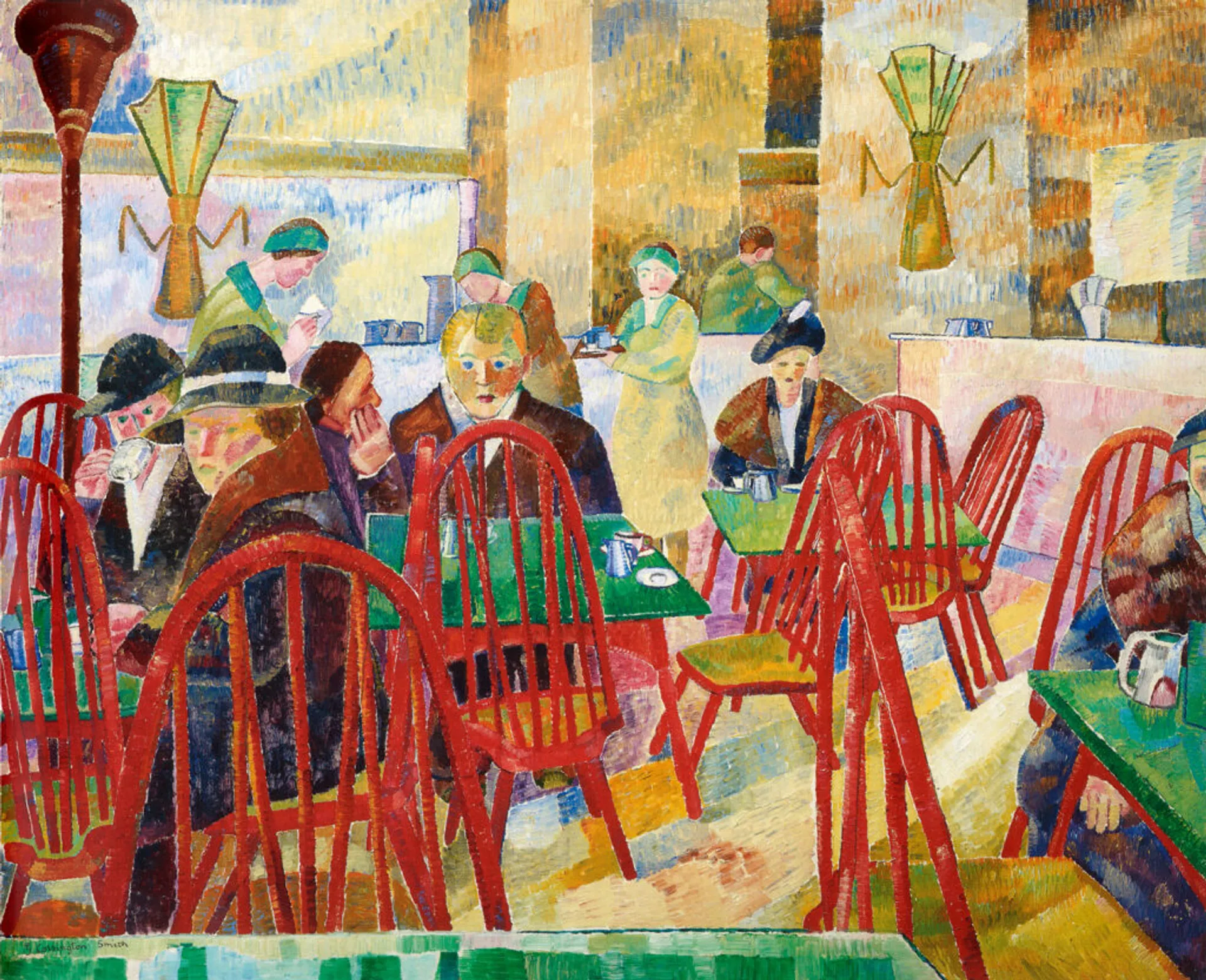
Grace Cossington Smith
The Lacquer Room, 1936
oil on paperboard on plywood
74.0 x 90.8 cm
Art Gallery of New South Wales, Sydney
© Estate of Grace Cossington Smith
Film crowd workers, 1937, was painted sometime after the artist’s own experiences and followed a period of secure paid employment working with Australian artist Arthur Murch who had charge of decorations for the Australian wool pavilion at the Empire Exhibition, Glasgow, contracting Dobell and other Australians for six months at £10 per week. The painting is a wonderfully vivid design based around four characters: the burly man in the foreground and three women chatting at the back. By observing the man from slightly behind, Dobell achieves an intimacy in the picture, as if the subject has been caught contemplating his next film scene. He may even have been one of those who piled on Dobell in Chu Chin Chow. This anonymity underscores the artist’s own understanding of how fleeting this form of celluloid fame actually was. Mixing Dobell’s fluid brush marks with acute observation, a particular accent is provided by the red café chairs, which recall for many Australians similar furniture featured in Grace Cossington Smith’s contemporaneous The Lacquer Room, 1936 (Art Gallery of New South Wales). The first owner of Film crowd workers was the renowned collector Norman Schureck, who travelled to Australia from Belgium in 1926. Schureck owned a number of works by Dobell, including Canal Bruges, 1933; Woman in restaurant, 1934; Kensington Gardens, 1935; Cockney mother, 1937; and Sketch for Wangi Boy, c.1948 – 49; and the artist painted his portrait in 1942. Whilst the auction of Schureck’s vast collection in 1962 included works by such names as Eugène Boudin, Courbet and Utrillo, Dobell emerged as the highest-selling artist.
1. William Dobell. Interview with Garth Nettheim, cited in Bevan, S, Bill: the life of William Dobell, Simon and Schuster, Sydney, 2014, p. 70
2. Chu Chin Chow, 1934, see: https://www.youtube.com/watch?v=LA3Hvxh-yrU (accessed 20 October 2026)
3. William Dobell. Interview with James Gleeson, cited in Donaldson, E., William Dobell: an artist’s life, Exile Publishing, NSW, 2010, p. 48
4. ‘William Dobell: an Australian genius’, People, Sydney, 21 June 1950, p. 42
5. P. G. Konody, The Observer, London, 28 April(?), 1933, cited in Ure Smith, S. (ed.), The Art of William Dobell, Ure Smith, Sydney, 1946, p. 16
6. Donaldson, op. cit., p. 45
7. ibid., p. 48
8. ibid.
9. Adams, B., Portrait of an artist: a biography of William Dobell, Hutchinson, Melbourne, 1983, p. 71
10. Bevan, op. cit., p. 70
ANDREW GAYNOR