
Emily Kam Kngwarreye
(c.1910 - 1996)
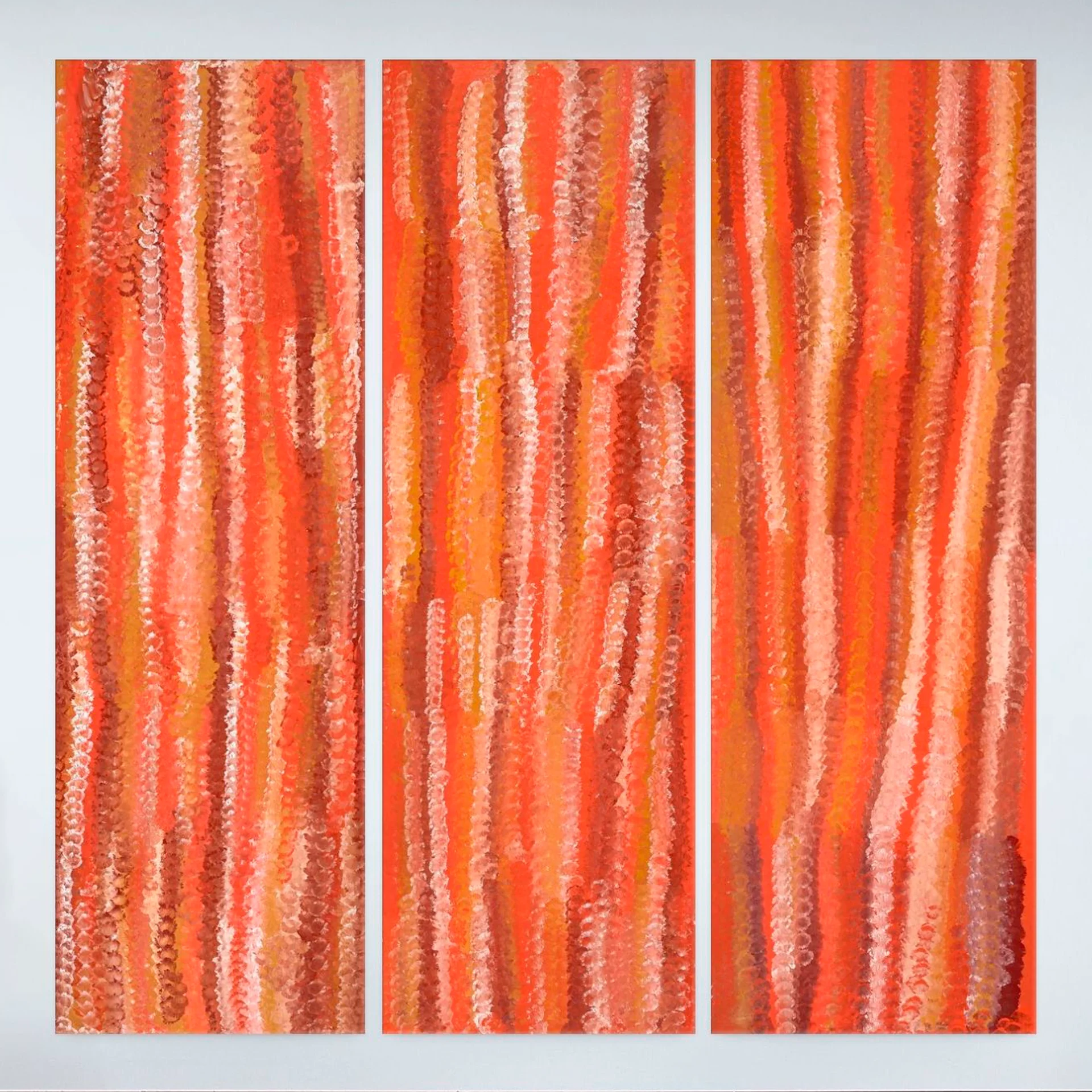
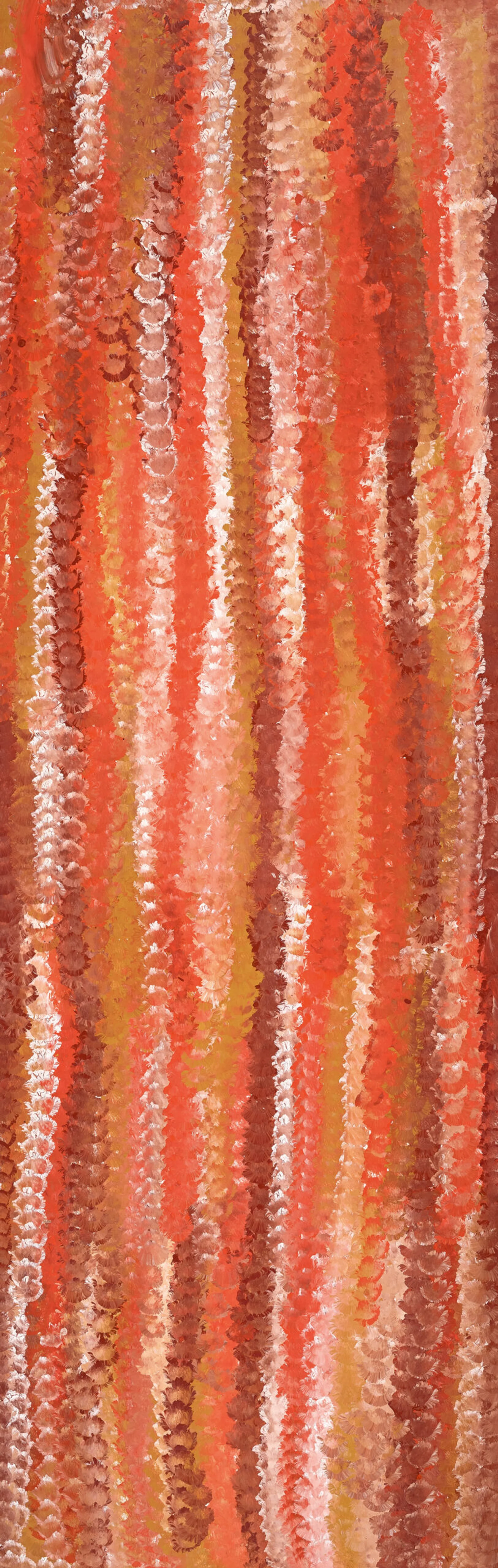
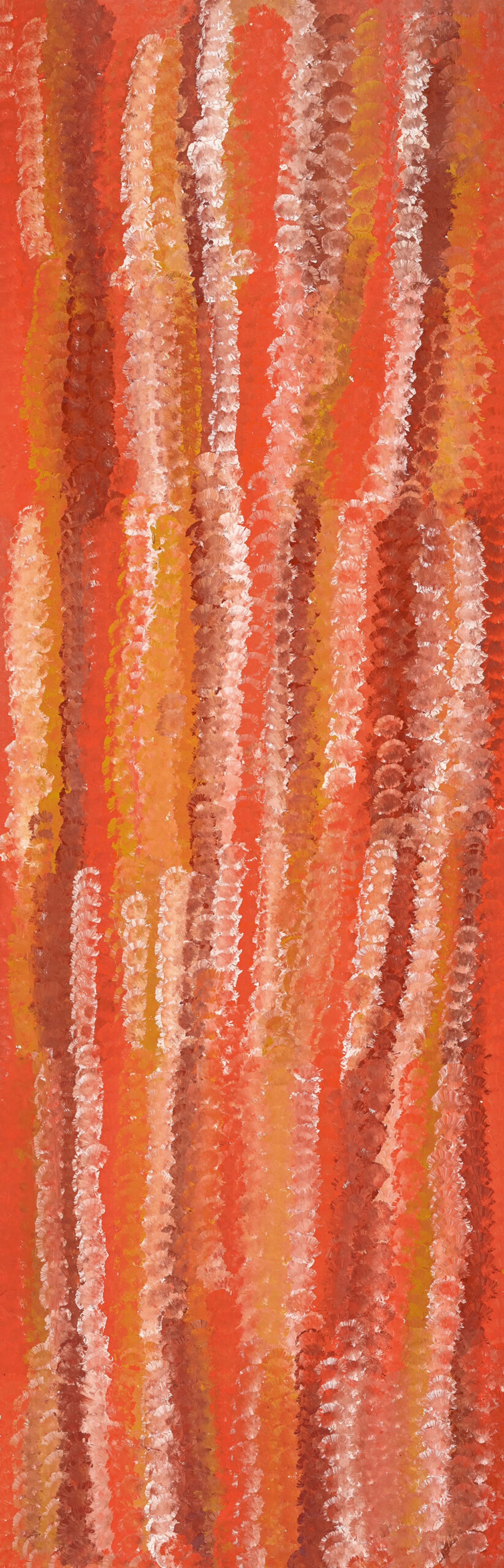
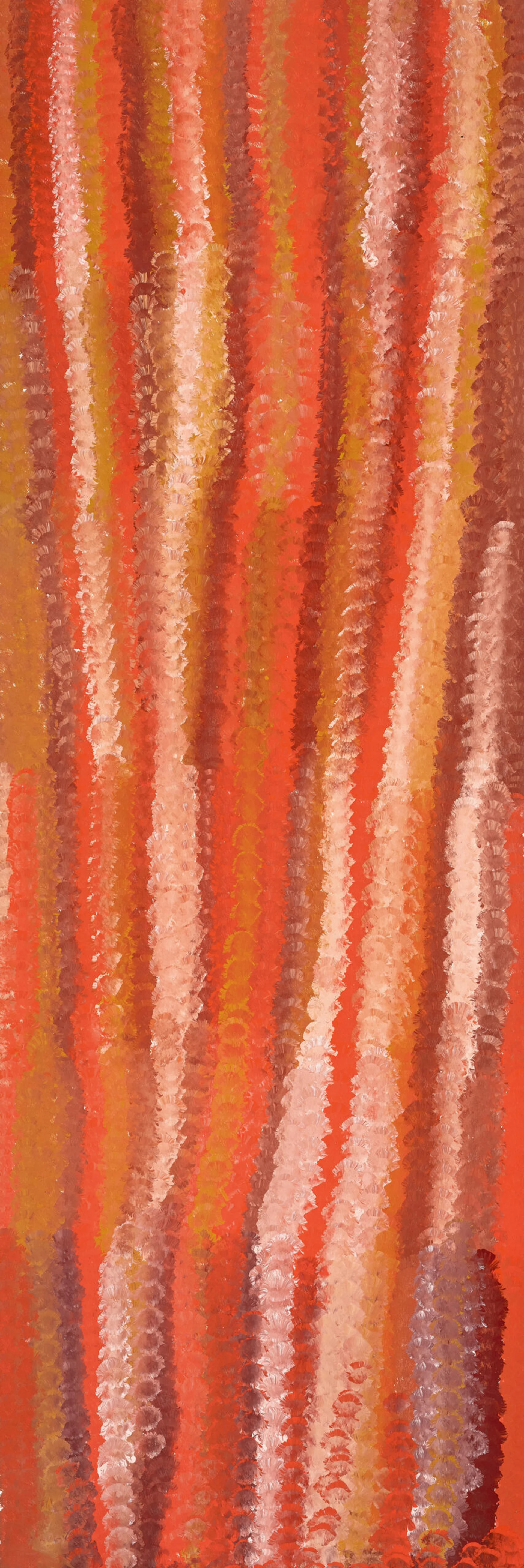
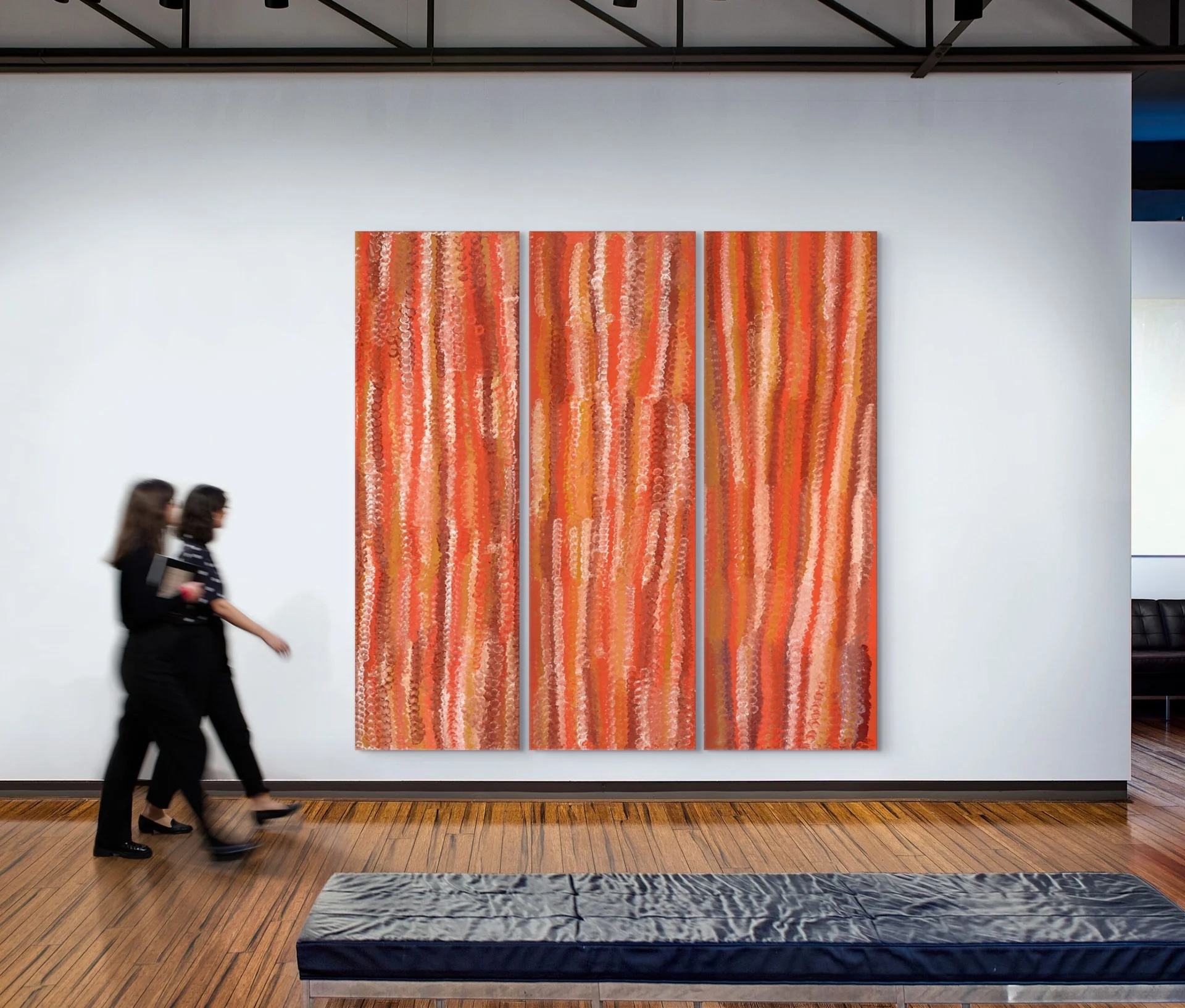
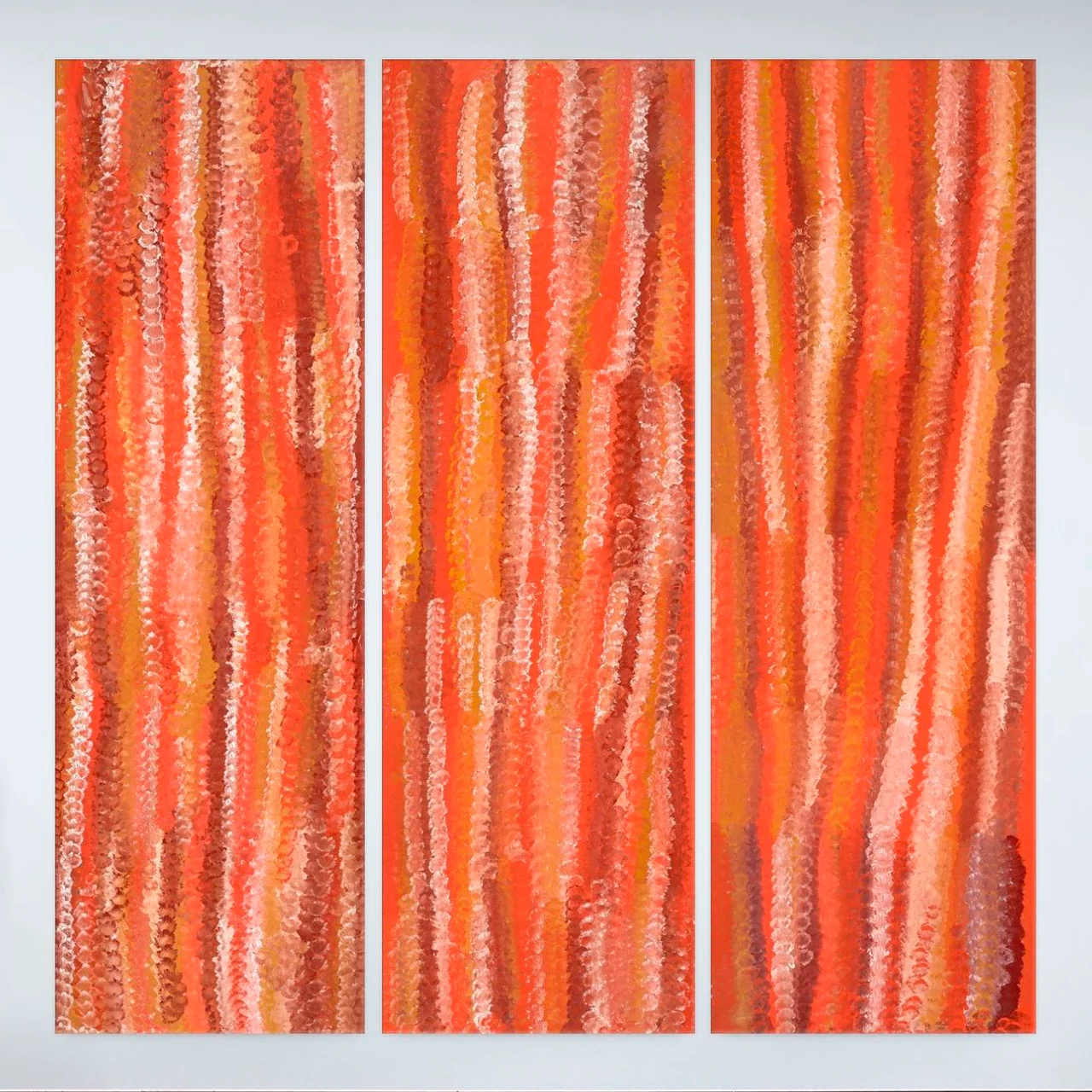
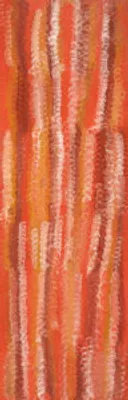
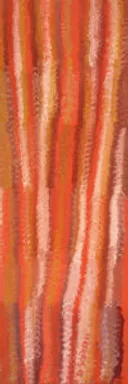
Awelye I, II, III, 1996
synthetic polymer paint on canvas
i. 256.0 x 82.0 cm
ii. 256.0 x 82.0 cm
iii. 256.0 x 85.5 cm
256.0 x 249.5 cm (overall)
bears inscription on each verso: artist’s name, date and Rodney Gooch cats. 20.496, 21.496, 23.496
Estimate:
$500,000 - $700,000
© Emily Kam Kngwarreye/Copyright Agency 2026
lot details
ii. 256.0 x 82.0 cm
iii. 256.0 x 85.5 cm
256.0 x 249.5 cm (overall)
Commissioned by Rodney Gooch, Alice Springs in March 1996
Private collection, Canberra
Thence by descent
Private collection, Canberra
In the summer of 1988 – 89, Rodney Gooch, under the auspices of the Central Australian Aboriginal Media Association, provided the women of Utopia, already endowed with a decade’s experience of wax batik painting, with 100 small canvases and boards and acrylic paints on which to translate their ceremonial designs. It was as part of this ‘Summer Project’ that Emily Kam Kngwarreye, the eldest member of the Utopia Women’s Batik Group, painted her first iconic work painting on a two-dimensional support, Emu Woman, 1988 – 89 (The Holmes a Court Collection, Heytesbury), reminiscent of her earlier batiks, this a design that contained her totems of the Emu and women’s ceremony (Awelye). Painted not long after, Awely, 1989 (National Gallery of Victoria), featured women’s ochre arlkeny (striped body markings) breast markings, painted spontaneously with an urgent confidence.
By the mid-1990s, Western Desert art had become a brand within contemporary art for which there was widespread critical endorsement and, correspondingly, a large market appetite.1 Responding to a commission from Gooch in March – April 1996, only months before her passing at the age of 86, Emily Kngwarreye returned to her beginnings to paint the present triptych, Awelye I, II, III, 1996 – a rhythmic cascade of dotted chains in rich, warm hues. Stylistically distinct from the finely dotted clouds of her works from the early 1990s, this expansive triptych presents a dense curtain of large blotches, quickly and fluidly worked with wet-on-wet paint, Kngwarreye’s paintbrush fluttering and skidding across the picture planes. To conserve energy, Kngwarreye had adopted a new method of painting in 1992, pressing her paintbrush vertically onto the canvas, creating blooming florets of colour, capable of covering a large surface area when repeated in overlapping striations, as in this triptych.2 Responding to the urgency of her advancing years, Kngwarreye traded a loss of definition in her brushstrokes for a greater expressive quality and a certain baroque exuberance. Expansive in its scale, this triptych displays the nimble inventiveness of Kngwarreye’s mark-making and the dynamism with which it was put to the service of expressing her ancient and enduring connection to Country.
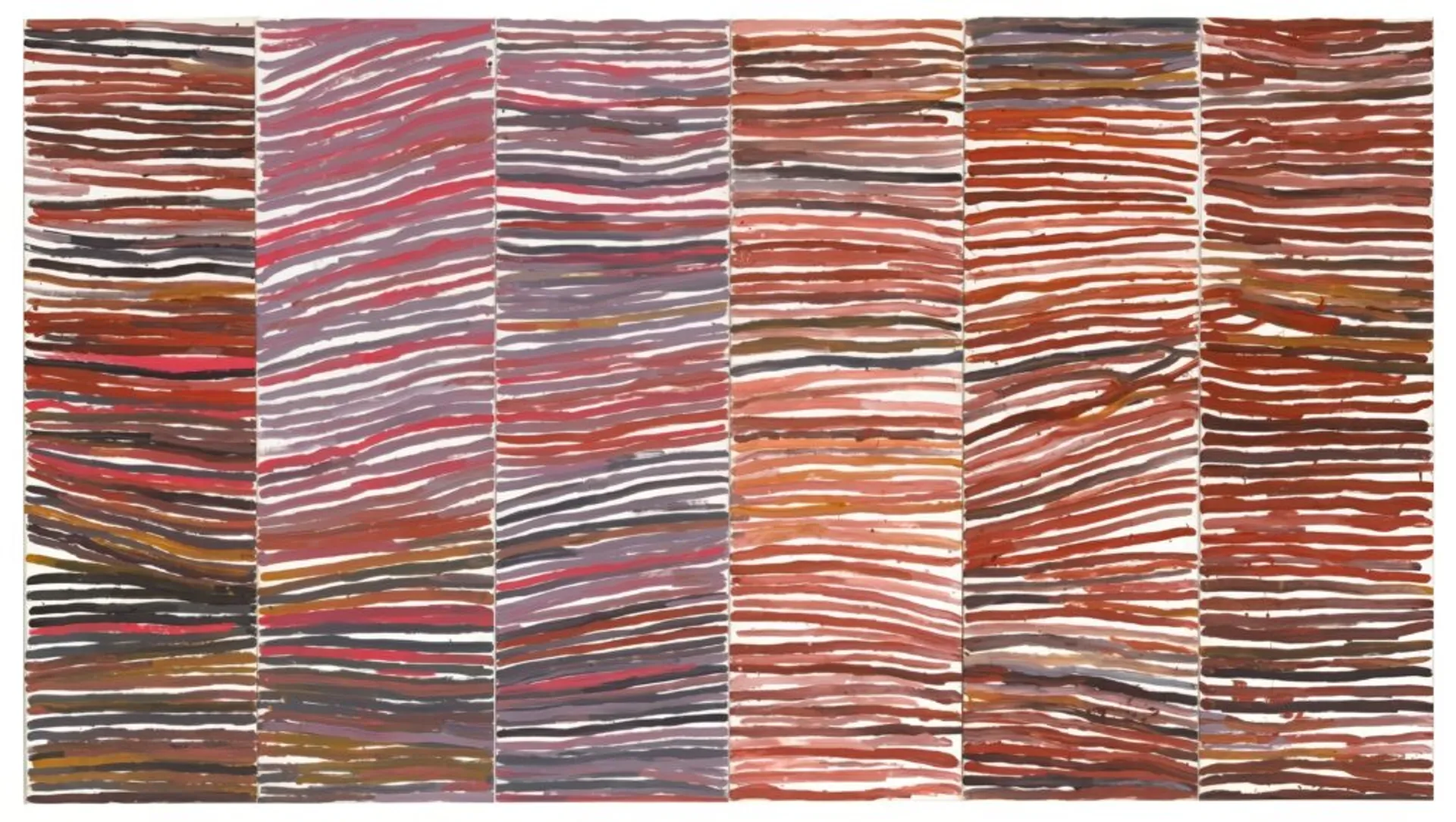
Emily Kam Kngwarreye
Untitled (awely), 1994
synthetic polymer paint on canvas
190.0 x 340.2 cm
National Gallery of Australia, Canberra
© Emily Kngwarreye/Copyright Agency 2026
Within Awelye I, II, III, Kngwarreye’s pulsating and rhythmic patterning evokes the life forces and cyclical continuum of the seasons that sustain and govern the existence of the Alhalker people in their remote part of the Simpson Desert. In her later years, Kngwarreye’s lines and dots became one, creating through their dense field of overlapping marks a sense of limitless depth. These unending chains of rosettes express the unbroken thread of matrilineal knowledge in the striped painted body designs and repeated rhythms of song verses and dances of the awelye. With a poetry of association common in Kngwarreye’s practice, the lines also refer to the subterranean structures of the kame (yam seed and flower) and to the animal that eats it, the emu – both central Dreamings for the artist. Within this triptych, Awelye, the artist’s reduced colour palette of bold scarlet, earthy umber and ochre, and white also refers to the kame’s botanical cycle of maturation as the plants change colour, moving from white, then yellow, and then reddish brown, inviting metaphorical comparisons with the three life stages of people – the white ones are ampa akely (babies), the yellow ones awenk (teenage girls), and the brown ones are arelh ampwa (old women).3
While Emily Kngwarreye’s decorative abstract language happened to transcend cultural boundaries to be appreciated by audiences familiar with the formalism of European and American abstraction, her mark-making was always anchored in rich cultural significance. In the twilight years of her life, Kngwarreye continued to paint sitting on the ground, in the same way she did to source and prepare food, tell Dreaming stories with designs in the sand and apply body paint for the awelye women’s ceremonies over which she presided as a community elder.
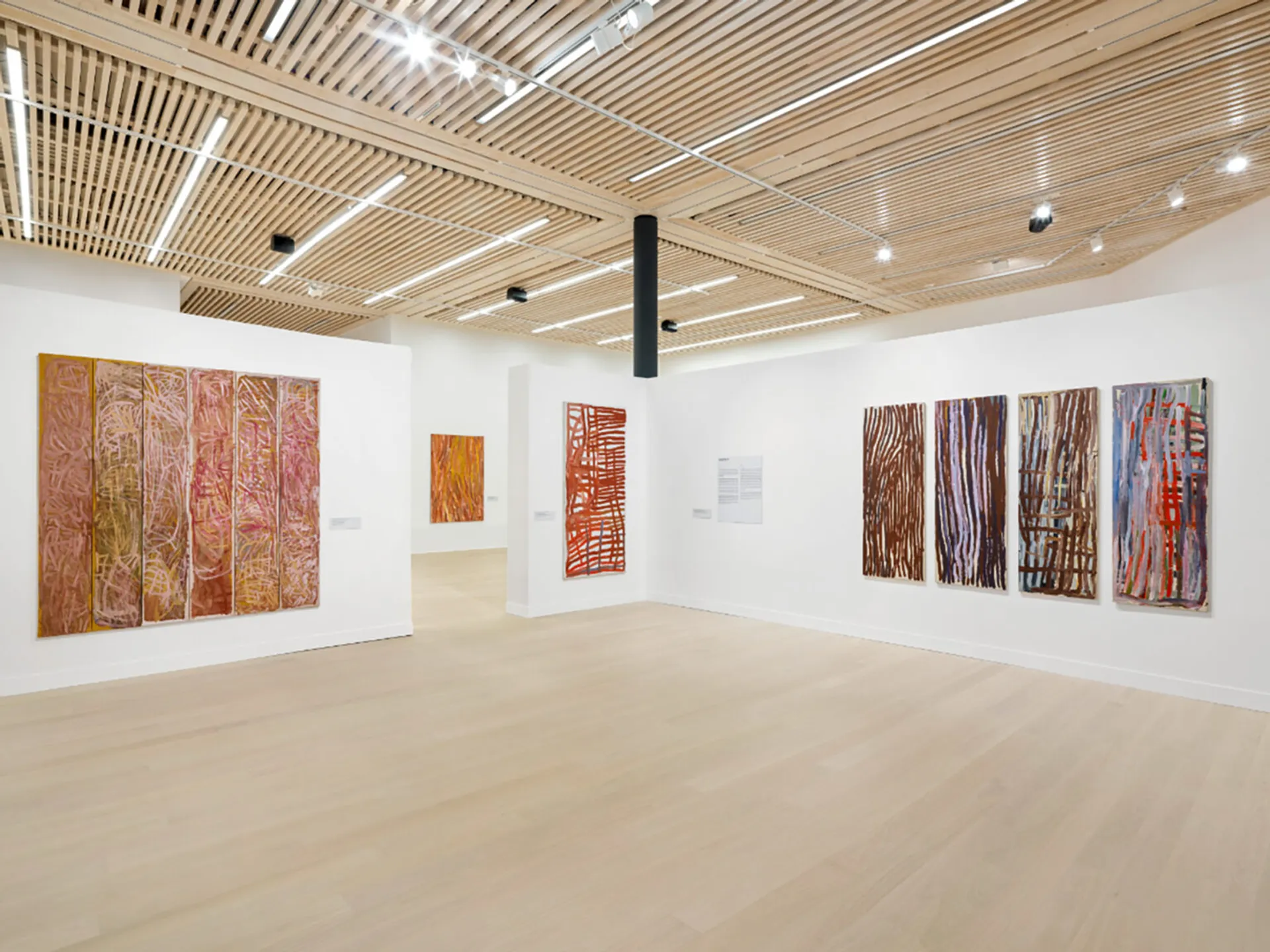
Installation view for Emily Kam Kngwarray, Fondation Opale, Lens, Switzerland, 14 June – 8 November 2026
photographer: Lumento
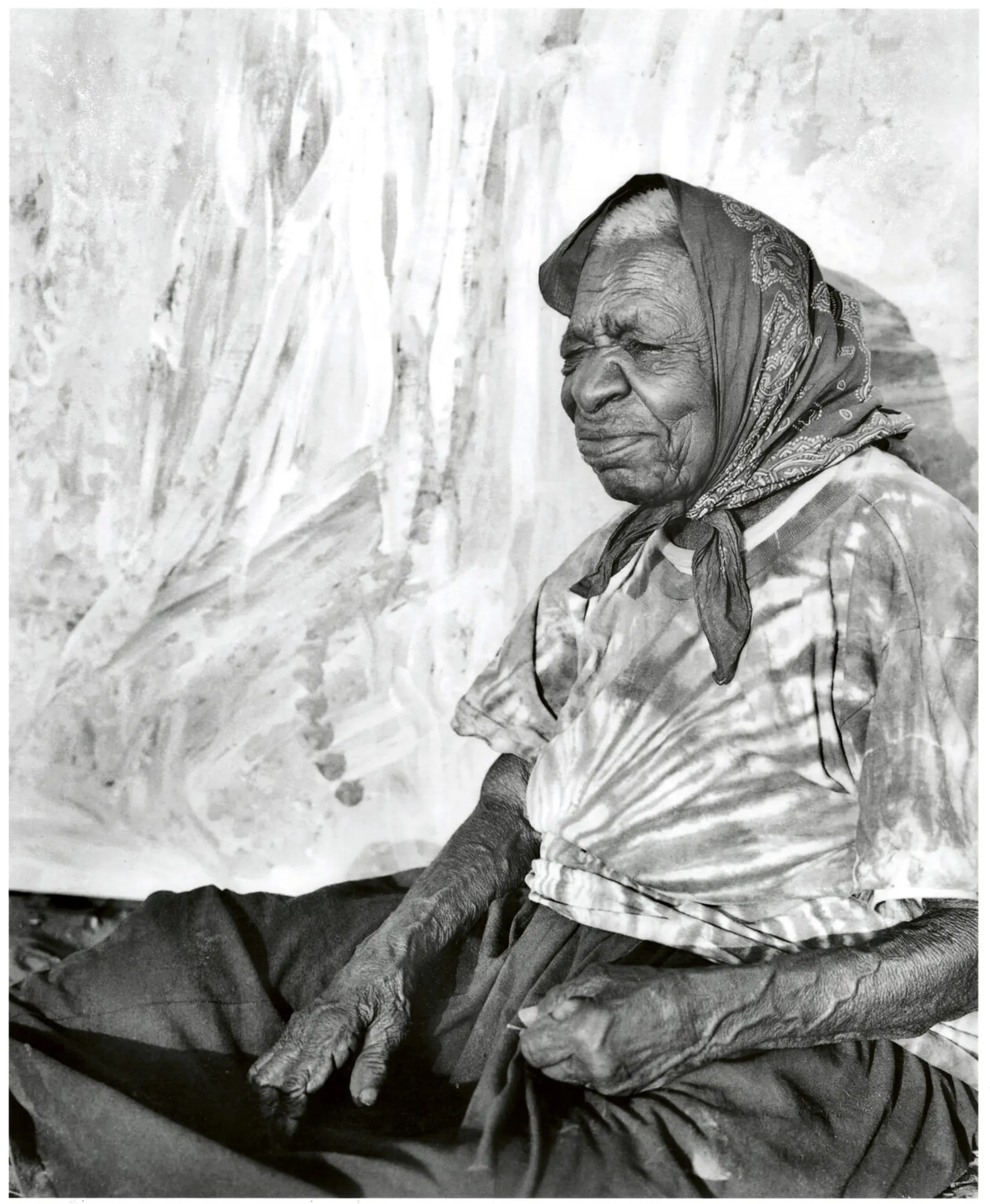
Emily Kngwarreye, 1994
photographer: Greg Weight
National Portrait Gallery, Canberra
© Greg Weight
Awelye are performed to ‘look after Country’, with knowledge transmitted from mother to daughter. By illustrating the awelye over a sequence of separate but interconnected panels, Kngwarreye expresses the communal and collective nature of the women’s ceremonies.4 The surface of Kngwarreye’s canvas can be likened to the ceremonial ground on which she performed the awelye, where rhythmic patterns of danced footprints leave parallel furrows in the sand, ephemeral iconographic traces. Alhalker Country was Emily Kam Kngwarreye’s raison d’être, and beyond celebrating the life-giving forces of nature, paintings such as this triptych become metaphorical self-portraits and declarations of her people’s sovereignty over their ancestral lands. In 1976, the awelye formed an important part of cultural evidence submitted for the Utopia Land Claim, which successfully returned the lease of Utopia Station to the traditional owners of Alyawarre and Kaytetye Country, also benefiting the people of Alhalker. Emily recalled the celebrations ‘The Judge gave the Country back after everybody had shown it to him. Then we painted ourselves with the designs from the Country. After that we danced, ‘This is the Country.’’5
1. McLean, I., Rattling Spears. A History of Australian Indigenous Art, Reaktion Books, London, 2016 p. 196
2. Isaacs, J., ‘Anmatyerre Artist’, in Isaacs, J. (et al.), Emily Kngwarreye Paintings, Craftsman House, Sydney, 1998, p. 21
3. Cole, K., Green, J., and Perkins, H. (eds.), Emily Kam Kngwarreye, National Gallery of Australia, Canberra, 2023, p. 153
4. ibid., p. 170
5. Emily Kngwarreye, cited ibid., p. 145
LUCIE REEVES-SMITH